All Titles
94 titles
 Forthcoming
Nonfiction
Unsettled Cameras
Photography, Mobility, and Jewish Nation-Building in Mandate Palestine
Price: $64.95
 Forthcoming
Fiction
The Bureau of Unknown Fates
When young French woman marries and moves to her German husband’s small hometown, Bad Arolsen, she finds a world where no one discusses what the locals did during the war. She has no idea that her life will be changed forever when she accepts a job at the secretive International Tracing Service―founded by the Allies at the end of WWII to help trace the fates of millions of wartime dead and displaced. Meticulous and conscientious, Irene quickly becomes obsessed with her work―at the cost of her personal life.
Years later, she is entrusted with returning thousands of confiscated objects, recovered from the liberated camps. Irène pieces together the identity of each object's rightful owner, in order to give the descendants of the victims something to remember their lost relatives by. A faded cloth doll, a medallion, an embroidered handkerchief . . . every object contains its secrets. During her research, Irène meets people who will inspire and guide her from Lublin to Warsaw, from Berlin to Paris, to discover a past that concerns her personally. In so doing, she glimpses humanity―at its worst, but also, its best―and looking for the dead, she finds the living.
Weaving together the trajectories of these individual lives with the collective memory of Europe, this devastatingly beautiful novel is suffused with wisdom and compassion.
Price: $30.00
 Forthcoming
Nonfiction
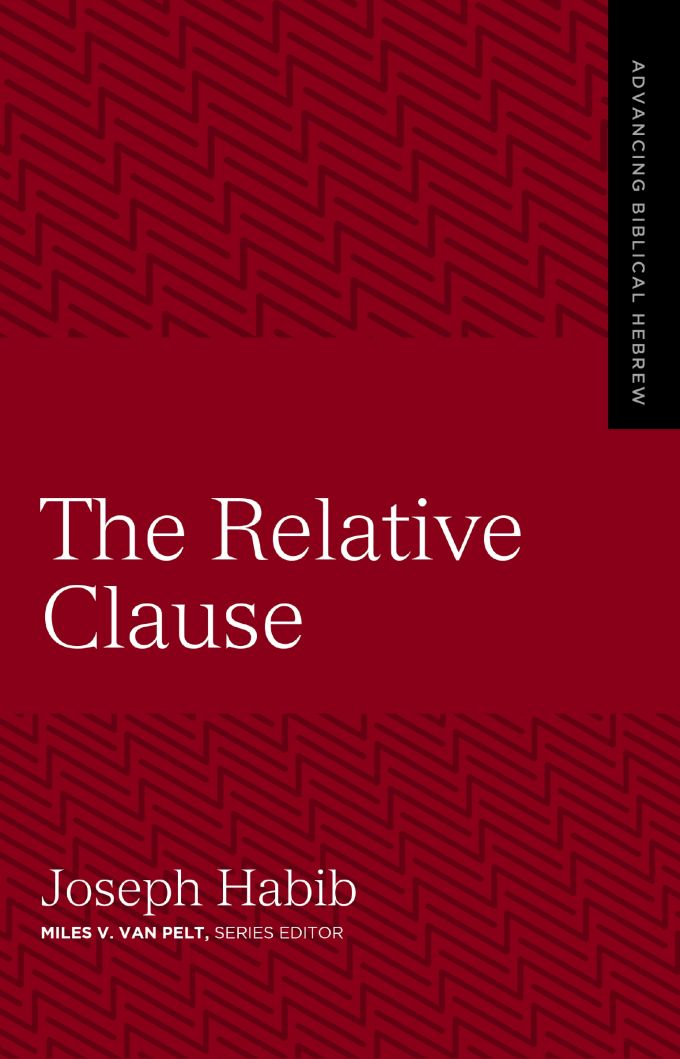
The Relative Clause
The Relative Clause by Joseph Habib offers a comprehensive study of the forms and functions of the relative clause in Biblical Hebrew. Habib carefully analyzes the internal structure of the Hebrew relative clause, demonstrating how its features influence both translation and interpretation of the biblical text. With precise explanations, extensive examples, and insightful commentary, The Relative Clause provides an indispensable resource for students, scholars, and all who engage in the study of Biblical Hebrew.
Advancing Biblical Hebrew, edited by Miles V. Van Pelt, is an accessible book series intended for students wanting to press deeper in their Hebrew language acquisition. Each volume provides focused instruction in a specific linguistic category in order to better understand, translate, and interpret the Hebrew Bible.
Individual volumes contain an introduction to the topic, a brief history of the topic, detailed descriptions of the topic with numerous examples, and suggested resources for further study.
Price: $30.00
 Forthcoming
Nonfiction
The Nuremberg Women
The Untold Story of the Eight Women Who Brought the Nazis to Justice
In November 1945, the eyes of the world turned to Nuremberg. Humanity was seeking not only the truth about Nazi crimes but also a vision of what justice might look like in their aftermath. The trials are traditionally associated with a roll call of famous men, but they were only part of the story. Not only were there women involved in the trial in every role―as journalists, researchers, lawyers, interpreters, court reporters, witnesses, artists, and even defendants―but they were pivotal in the trial’s outcome.
The Nuremberg Women tells the story of eight women: a brilliant American lawyer, three pioneering journalists, two German, one British, an iconoclastic artist, a beautiful refugee aristocrat, a dauntless survivor of Auschwitz, and a young Russian translator.
From the major stories about justice, gender, and politics at a pivotal moment in the twentieth century to the smaller, daily intimate tales of the women’s affairs and bar-room disputes, The Nuremberg Women shows the most famous trial of the twentieth century in a new light―making a brave new case for it having been a more diverse and democratic exercise than has often been recognized.
They reveal a Nuremberg that is more intimate, human, and haphazard; one that was lower paid and less publicized. They demonstrate that the trial was remarkable not because it was perfect but because, against all odds, it happened. Thanks to these women and many others, justice was served.
Price: $33.00
 Forthcoming
Nonfiction
Jewish Anti-Zionism
A Historical Anthology
In the decades since the founding of the state of Israel in 1948, many have equated Zionism with Jewish identity—and anti-Zionism with antisemitism. Few remember now that the Zionist movement triggered passionate debate among Jews, with many expressing ambivalence or opposition to the Zionist project. In Jewish Anti-Zionism, Shaul Magid and Zev Mishell have gathered a broad selection of documents, written between the late nineteenth century and the present day, many of them newly translated into English from multiple languages, revealing the rich variety of Jewish opposition to Zionism over the decades. Following Magid and Mishell’s long, authoritative introduction on the history of anti-Zionism among Jews, the book features dozens of texts by Jewish writers from diverse backgrounds discussing why they reject the Zionist idea as the best option for Jewish flourishing.
The documents reflect a lively debate carried out though multiple forms—personal letters, essays, speeches, manifestos, newspaper columns, and extracts from learned treatises. The authors range from scholars and other thinkers writing well before the establishment of the state of Israel to well-known contemporary voices including Peter Beinart, Noam Chomsky, Naomi Klein, and Judith Butler. Magid and Mishell preface each text with a short introduction that offers historical and ideological context
Price: $35.00
Nonfiction
Pretend You Believe
How to Enter Religion
From one of the country's most innovative rabbis, an illuminating journey through Jewish teaching toward a new vision of religious experience in contemporary life Many of us long for spiritual belonging and connection, only to run up against our confusion, discomfort, even disgust with organized religion. Noa Kushner understands this well. As the founding rabbi of The Kitchen, a progressive, experimental San Francisco Jewish congregation, she has guided thousands of people into a relationship with religion they never thought they would or could experience. In this concise, soul-stirring book, Kushner offers a transformational picture of religion for the moments in life when we yearn to transcend our self-imposed limits. She proposes that we treat religion, at first, not as something we believe but as something we do, so we can pursue the profound questions that perspective unfolds. How does prayer work? How do religious traditions evolve? What is the relationship between religion and ethics? And most of all, why should we be religious? Through luminous storytelling from the Torah, Jewish fable, and her own life, Kushner crafts an elegant, persuasive case for religious community not only as an antidote to our society's corrosive obsession with status, but also a fundamental good in and of itself. Written in a Jewish idiom, but open to readers of all backgrounds, Pretend You Believe is a powerful meditation on God, responsibility, doubt, progress, justice, love, forgiveness, joy, and more. With this book, Kushner has captured the wonder of religious feeling, and inscribed an invitation to readers everywhere.
 Forthcoming
Nonfiction
Zionism in Translation: Encounters in the German-Hebrew Archive
Zionism in Translation concerns exchanges―primarily of letters but also drafts, reviews, and other ephemera―sent to or from Jerusalem in the decades after 1948. All were written in German and Hebrew by a fascinating range of literary figures, including Hannah Arendt, Gershom Scholem, Yehuda Amichai, Ludwig Strauss, Erich Auerbach, Walter Benjamin, Leah Goldberg, Peter Szondi, Paul Celan, and Tuvia Ruebner. Na’ama Rokem illuminates the complexities that emerge as the two languages mix in this extraordinary epistolary network.
The writers that Rokem studies here contend with the genocidal violence that brought the rich historical relation between German and Hebrew to a seeming end. They also grapple, in different ways, with the new reality in Israel/Palestine in the wake of the founding of the State of Israel and the Palestinian Nakba. The bilingual conversation that crosses over between German and Hebrew in these letters thus centers around the question of Jewish fate in the twentieth century and is immersed in negotiations about Jewish nationalism, the Zionist movement, and the possibilities of Jewish poetry. In the space between German and Hebrew, Rokem argues, the protagonists of her story voice ambivalences and hesitancies not found elsewhere.
Zionism in Translation joins a growing body of scholarship that uncovers the complex modes of belonging and resistance that unfold around the Zionist movement in the twentieth century. It will interest all readers concerned with modern Jewish intellectual, cultural, and literary history, the history of Zionism, and writers such as Arendt or Celan.
Price: $30.00
 Forthcoming
Nonfiction
Figures of Youth
Metaphor and Imagination in Children's Holocaust Literature
Holocaust literature for children and young adults reveals the ways we imagine, narrate, communicate, and alter the facts of war, genocide, and trauma.
In order to understand the Holocaust and its representations, it is important not to overlook figurative tellings and retellings; this is uniquely apparent in literature for young people, in which such imaginative and metaphorical movements are essential. In Figures of Youth: Metaphor and Imagination in Children's Holocaust Literature, Joanna Krongold explores the depth and breadth of Holocaust literature for young people, from wartime writings to present-day imaginings. Spanning chronological time periods, cultures, and genres, Figures of Youth examines the representational muzzles and creative possibilities of children's and young adult Holocaust literature. The experimentation and inventiveness inherent in literature for young people make it fruitful ground for exploring the complexities of the Holocaust.
Figures of Youth charts patterns of representation as time propels authors farther away from the event itself, demonstrating how and why children's literature makes important contributions to the field of Holocaust studies. By placing well-known texts like Anne Frank's diary in conversation with those that have been excluded or ignored in scholarly discourse surrounding Holocaust literature, the author offers a new and innovative understanding of metaphor and figurative dynamics in the representation of genocide.
Price: $105.00
 Forthcoming
Fiction
Fate A Novel
When Atara’s elderly father dies, he leaves behind a host of unanswered questions about his violent past and his strained relationship with his daughter. Yet one of their final meetings seems to provide a key to understanding: he mistakes Atara for his first wife, Rachel, revealing a warmth and kindness she had never seen in him. Atara sets out to find Rachel and uncover this long-buried chapter of his life. Why did their marriage end abruptly in 1948, after only one year? How were they changed by fighting together in the underground to establish the State of Israel?
Atara’s encounter with Rachel will upend her own life and that of her family, sparking an uncontainable cascade of events. As their history is exposed, it illuminates but also casts a pall on the present and the future, confronting each character with dilemmas of fate, control, responsibility, faith, disappointment, and love.
Price: $19.99
 Forthcoming
Nonfiction
Yiddish Scholarship Comes to America
The YIVO Institute at 100
Price: $36.99
Fiction
Antitherapies
Winner of Brazil’s prestigious São Paulo Prize, Jacques Fux’s brilliant literary debut novel unveils an outrageously entertaining Portrait of the Artist as a Young Schlemiel. Antitherapies relates the life journey of a young Jewish man coming of age in Belo Horizonte, Brazil, from his sensitive childhood and the primal indignation of circumcision, through awkward adolescence, and up to early adulthood and his decision to become a writer. Its peevish protagonist sees Jewishness in general as a festive carnival of irritations. The sources of his joy as well as his misery include his mother’s overbearing love; the Nazis, who never really left the stage after their defeat in 1945; his absurdly high IQ; and his grappling with the perpetual tension between cultural assimilation and the preservation of his Jewish identity and heritage.
Told through twenty-one playful “anti-therapeutic” sessions, the narrator summons myriad remembrances of things past, chronicling how he carefully considered and then ultimately rejected an assortment of possible life paths: astrophysicist, delinquent, clairvoyant, forger, hairdresser, logician, charlatan, and mathematician, among others. Fux masterfully integrates poetry, humor, magical realism, and a host of literary allusions—including Borges, Pessoa, Joyce, Primo Levi, Georges Perec, and Phillip Roth—to create a delightfully rich and original work of autofiction.
Price: $18.95
 Forthcoming
Nonfiction
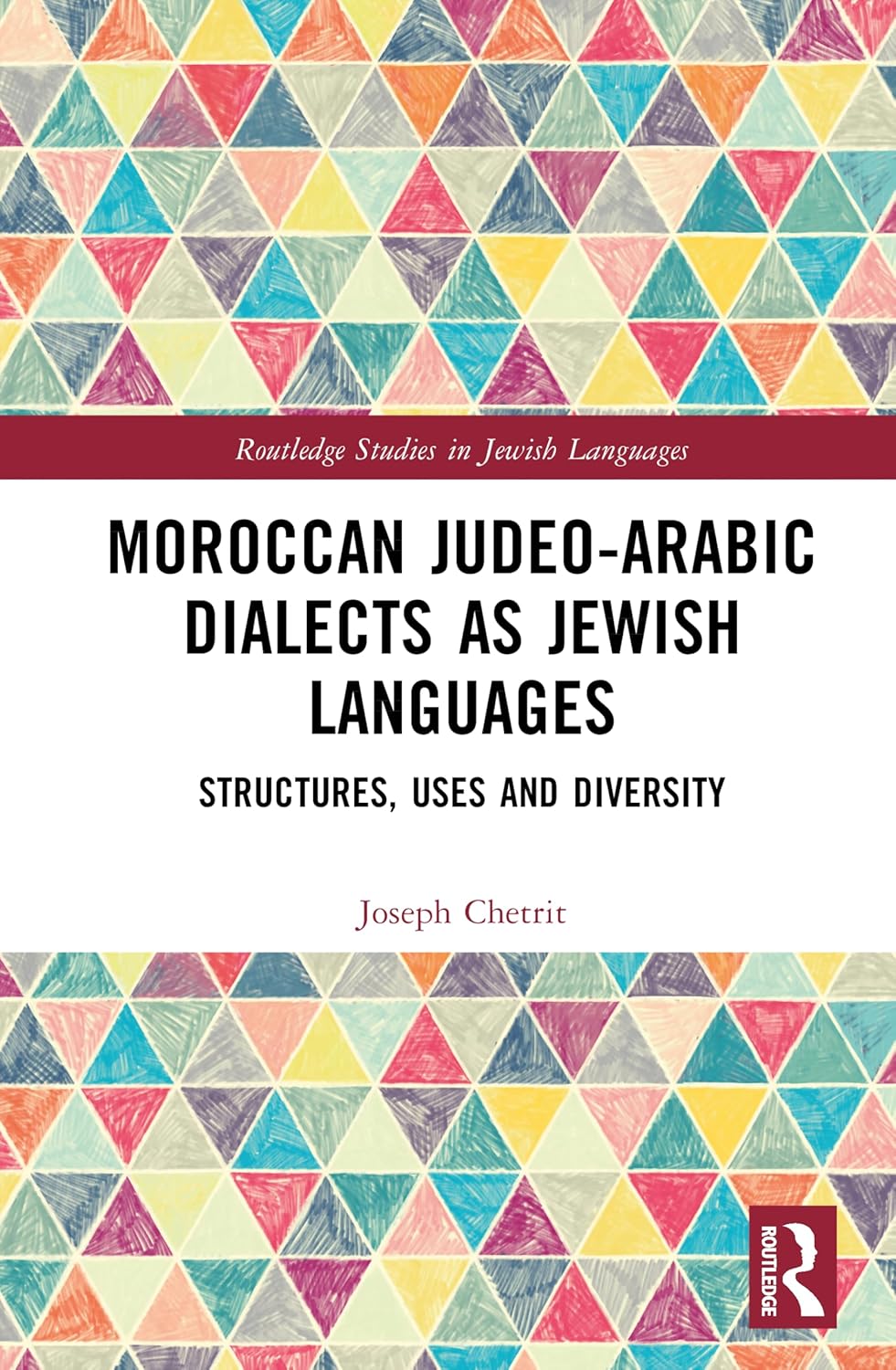
Moroccan Judeo-Arabic Dialects as Jewish Languages
Structures, uses and Diversity
Moroccan Judeo-Arabic Dialects as Jewish Languages provides an in-depth analysis of the diachrony and synchrony of the Judeo-Arabic dialects formed in Morocco from the 16th onwards, their diversity, their constituents, their forms, their categories, and their uses in community and family life.
Drawing on extensive linguistic data from a wide range of sources, including manuscripts and oral performances, this book examines the phonetics, phonology and morphology of the Judeo-Arabic dialects to offer insightful analyses and discoveries. Framed by a theoretical and methodological introduction, this book combines the findings of fieldwork with hundreds of informants from over 130 urban and rural Moroccan Jewish communities, for whom Judeo-Arabic is their mother tongue and primary language, with the advantages of modern linguistic, sociolinguistic, and socio-pragmatic analyses that allow for a better understanding of natural dialectal phenomena and their interpretation.
The book will be relevant to scholars of Arabic dialectology, sociolinguistics, and Jewish languages.
Price: $200.00
 Forthcoming
Cookbook
The Dessert Table
100 Joyful Jewish Sweets
The dessert table is the star of any Jewish gathering: sprinkle cookies and honey cake, airy meringues and flaky rugelach, sweets brimming with tender apples and bright pops of pomegranate. Eager to bring a little extra sweetness to all our tables, Leah Koenig takes us on a delightful tour through the 2,000-year-old tradition of Jewish sweets. She shares recipes and stories from historic Jewish communities in Venice, Syria, and Curaçao; home bakers from Hungary and Poland; and up-and-coming diaspora bakeries across the United States. Her 100 all-new recipes include creative takes on familiar favorites, like Chai-Spiced Cheesecake or Chocolate Turtle Babka, and bring lesser-known gems to the conversation, such as a lush Orange and Almond Cake and Fluffy Apricot Jam Doughnuts inspired by Hungarian fánk. Beloved for her well-researched storytelling and clear, encouraging directions born from her own kitchen, Koenig energizes the dessert canon as no one else can.
Price: $39.99
 Forthcoming
Cookbook
A Year of Jewish Cooking
Recipes we can't live without
Cherished Jewish family recipes to cook for a year of festivals and rituals in this essential guidebook to recipes and traditions for the next generation.
The Monday Morning Cooking Club has been collecting, curating and celebrating family cooking for 20 years, preserving and sharing recipes and stories from past generations. Now, as their adult children phone home to ask how to make treasured family dishes, it's time for a guidebook for the next generation.
Join the sisterhood in their modern Jewish kitchen, cooking to the rhythm of a year of festivals and rituals – from Shabbat dinner to Shiva, from Purim and Pesach to Shavuot and Sukkot. Gather around the table and nurture your loved ones with this collection of mouth-watering classic recipes. A Year of Jewish Cooking is an essential and delicious resource to feed and nourish the soul of every reader.
Price: $32.00
 Forthcoming
Nonfiction
Illuminating Scriptural Connections
A Qur'anic Commentary on the Torah
Price: $34.95
 Forthcoming
Nonfiction
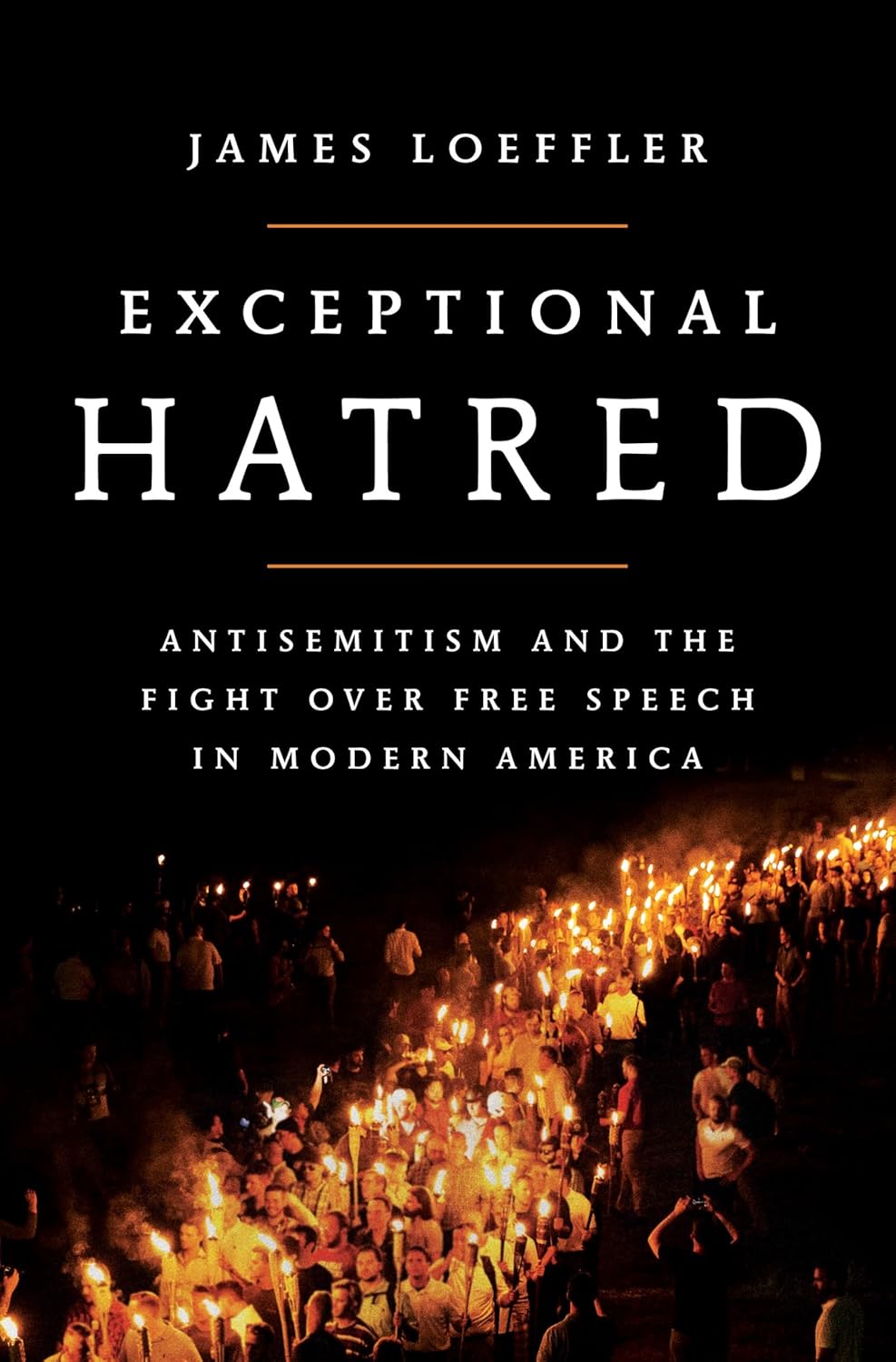
Exceptional Hatred
Antisemitism and the Fight over Free Speech in Modern America
Few issues are as vexed today as antisemitism and free speech. There is scarcely an arena―college campuses, congressional hearings, immigration courtrooms, social media platforms―where we are not polarized over what counts as antisemitism, which speech is protected by the First Amendment, and what the law should do about hatred. At a time of political crisis, antisemitism has become a point of ideological obsession.
None of this is new. In a sweeping history of ideas and law, James Loeffler recovers the forgotten roots of our contemporary turmoil. From two antisemitic riots in postwar Chicago to a neo-Nazi march in 1970s Skokie, Illinois, and the Charlottesville Unite the Right rally in our own time, Loeffler explores the ways in which America’s courts have grappled with hatred, freedom, and the tensions at the heart of liberal democracy: Are some hatreds more dangerous than others? Is tolerating hate speech the price we must pay for free speech? And can liberalism ever make good on its promise to end hatred through law?
Confronting these questions, Exceptional Hatred restores a missing history of hate speech, antisemitism, and the law, one that points to how we might protect difference without surrendering our principles of equality and freedom.
Price: $29.99
 Forthcoming
Nonfiction
Rites of Empire
Reforming Judaism in Imperial Russia
In Europe, the second half of the nineteenth and early twentieth centuries were a time of conflict and creativity about the nature and role of the sacred in private life and public culture. During these decades, the imperial Russian state became more interventionist in the realms of religion and culture, with interests in rationalizing religion and wiping out "superstition." At the same time, urban life gave rise to new forms of religious expression.
Rites of Empire explores the religious reform impulse among Jews in the Russian Empire, home to the world's largest Jewish population over the long nineteenth century. Moving beyond the old narrative of Russian Jewry as Orthodox or secular, Ellie R. Schainker shows how many Russian Jews in fact sought a synthesis between modernity and religious Judaism. Rabbis and voices in the newly emerging Jewish press debated reforms to Jewish law regarding dress, head coverings, circumcision, the number of prayers recited each day, sabbath observance, education, dietary rules, divorce laws, burial, and other religious practices. Urban Jewish communities built progressive synagogues in places like Vilnius, Odesa, and Moscow that featured choral music as a sign of modern Jewish expression. The imperial state's allowance and even promotion of Jewish reforms and ritual innovations shifted with the rise of political conservatism at the turn of the twentieth century. Religious reform went from being a political asset to being discredited as sectarian and non-conformist, and the state supported an increasingly politicized Orthodox Judaism as a conservative partner in combating revolution and secularity.
Schainker masterfully demonstrates how minority religious behavior was shaped by the imperial state as well as by the minorities themselves. In doing so, she recovers a history of religious diversity that was erased from the memory of Eastern European Jewry during the Soviet years and in the Russian diaspora following mass migration.
Price: $35.00
Forthcoming
Nonfiction
Surviving Translation
Studies of Jews In Antiquity For Tessa Rajak
A tribute to the life-work of Tessa Rajak, evaluating and engaging with major themes to which she has made ground-breaking contributions to the field of Hellenistic Judaism. Key topics include the study of Josephus as a Jewish historian, of the Greek Bible in its Jewish context, Jewish experiences of ‘diaspora’ life under Greek and Roman rule (including attitudes towards the Roman Empire), the interpretation of Jewish inscriptions, and Jewish creative engagement with the art of translating Jewish traditions into new contexts.
Price: $147.00
 Forthcoming
Defying Hitler A Memoir
Written in 1939 and unpublished until 2000, Sebastian Haffner’s memoir of the rise of Nazism in Germany offers a unique portrait of the lives of German citizens between the wars. Covering the period between 1907 and 1933, his eyewitness account describes a country in constant flux, where civilians struggle to reconcile the tedium and dramas of their private lives with the world-historical scale of Nazi politics. How does one recognize a turning point in real time? From the rise of Hitler Youth to the economic crisis of 1923, Haffner charts a personal history through the disturbing years in which ordinary Germans joined the Nazi party with willingness, indifference, and glee. An unflinching look at the day-to-day changes of an increasingly fascist society, <i>Defying Hitler</i> is a perennially urgent work of first-person history.
 Forthcoming
Nonfiction
Judaism Mediated
Learning About Jewishness Through the Cultural Arts
Judaism Mediated explores how Jews and non-Jews learn about Judaism through participation in cultural, digital, and leisurely spaces. Most work on religious education has focused on institutional learning, like religious classrooms and houses of worship, or on the transmission of religious values at home. And most studies focus on youth and how they become socialized into their religious traditions. But, looking specifically at Judaism, Judaism Mediated argues that this focus overlooks how engagement with the arts, such as theatre or museums or music, influences how adults learn about religion.
Laura Yares and Sharon Avni examine audience engagements with five different Jewish cultural arts settings–museums, web-based performances, streaming television, concerts, and live theatre. They show that depictions of Jewish people and topics in these cultural spaces can create powerful learning experiences. However, learning about Judaism through the arts can also be mis-educative, reinforcing stereotypes or creating misunderstandings.
At its core, this book makes the case that adult audiences learn about Judaism and Jewishness in significant ways when they experience Jewish culture, and that we need to expand our understanding of where and how religious education happens. The volume shows not only that religious learning happens in diverse spaces, but that learning in leisure time can take on social, cognitive, and affective dimensions, too. Judaism Mediated offers compelling case studies of contemporary American religion relevant for readers interested in how people enact religion in everyday life.
Price: $99.00
 Forthcoming
Nonfiction
The Challenges of Sovereignty
Essays on Israel and Zionism
Over the course of his rich career, David Ellenson--one of the most outstanding Jewish scholars, intellectuals, and thinkers of our time--probed the tension between tradition and modernity, especially as reflected in the ceaseless reinterpretation of liturgical and halakhic texts. Alongside that scholarly interest, largely centered on European Jewry, Ellenson produced an impressive body of work on Zionism and Israel.
This volume follows the arc of this body of work from Ellenson's early articles on the Zionism of American rabbis to his last essay on the struggle between Jewish and democratic impulses in Israeli society. He draws on familiar sources of inquiry--Jewish prayers and legal sources--to chart changes in Israeli religious life and to excavate its theological-political foundation. What emerges is a profound meditation on some of the most important questions that Israel faces today: what does it mean to be Jewish in the state? What role should Halakhah play in a self-defined Jewish state? How should the state treat its non-Jewish minority? How deeply rooted is democracy in the state and its foundational texts? And can the state ever escape seemingly irrepressible internal and external conflict?
Price: $48.00
 Forthcoming
Nonfiction
Child Rehabilitation from the Holocaust to October 7
After October 7th, which confronted children with unimaginable violence, the potential to apply post-WW II and Holocaust child rehabilitation approaches became clearly visible and urgent. After 1945, hundreds of thousands of children had to be brought back to everyday life against the background of harrowing experiences during the Holocaust years. This volume bridges historical insights with current challenges, offering strategies for rehabilitating conflict-affected youth. It synthesizes knowledge from diverse fields to support victims of war and displacement. The work transforms past experiences into actionable support, equipping professionals with insights to reshape child rehabilitation in conflict zones, underscoring the importance of historical lessons in addressing present-day crises.
Price: $82.99
 Forthcoming
Nonfiction
Rethinking the Beginning of the Kabbalah
The Kabbalistic literature, with its enigmatic secrets, vivid mythical depictions, and profound mystical content, along with its exhortations and admonitions to study its contents with great caution, is acknowledged as a cornerstone of the medieval Jewish intellectual tradition. The sudden appearance of this unique body of literature at the outset of the thirteenth century captivated scholars as early as the nineteenth century, establishing itself as a central inquiry within the historiography of the Kabbalah. With this book, Tzahi Weiss reassesses the legitimacy of 'Kabbalah' as a term altogether. In his seminal work Origins of the Kabbalah, Gershom Scholem articulated the sudden appearance of this literature as a fundamental question in the history of the Jewish religion. Weiss returns to Scholem's question, offering a comprehensive historiographic account of the beginning of the Kabbalah for the first time since Scholem. To correct the ahistorical use of the term 'Kabbalah' to describe this important body of Jewish thought, Weiss proposes that scholars of this literature focus on the more definitive and concrete phenomenon of the systems of the Sefirot. Along the way, he sheds light on the intricate tapestry of early 13th-century Jewish religious thought, unveiling a nuanced spectrum beyond the conventional dichotomy of 'Kabbalah' and 'philosophy.'
Price: $75.00
 Forthcoming
Nonfiction
Antisemitism and Jew Hatred
Psychological Perspectives
<p><b>An unflinching and up-to-date examination of the latest trends and research in antisemitism</b> <p>In <i>Antisemitism and Jew Hatred: Psychological Perspectives,</i> experienced psychologist and researcher Julie Ancis delivers an insightful and empirically grounded discussion of the social and psychological dimensions of antisemitism. The book offers a collection of groundbreaking perspectives from leading scholars who dissect contemporary antisemitic thought. Together, they explain the impact of online discourse on antisemitism, generational shifts in attitudes towards Israel, Jews, Zionism, and antisemitism, and the cognitive processes that power antisemitic prejudice. <p>The authors provide three comprehensive sections on historical and modern antisemitism. They begin with the historical and present-day manifestations of antisemitism, including its sociocultural, political, and psychological implications. They then cover cutting-edge research on antisemitism, including online trends and detection methods. Finally, the book concludes with extensive information on how to combat antisemitism in the real world. <p><b>Inside the book:</b> <ul> <li>An expansive and authoritative review of the psychological and social foundations of antisemitism</li> <li>Practical strategies for scholars, educators, and researchers interested in combating antisemitism and mitigating its harmful effects</li> <li>An accessible synthesis of new, empirical research, historical analysis, and contemporary trends in technology and society as they pertain to antisemitism</li> </ul> <p>Perfect for professors and researchers of psychology, <i>Antisemitism and Jew Hatred</i> is also a must-read for clinicians, mental health practitioners, researchers with an interest in prejudice, hate, and discrimination, as well as the social and political movements motivated by those things, and undergraduate and graduate students of psychology.
Price: $79.95
 Forthcoming
Nonfiction
Holocaust Migration in German Jewish Literatures
Analysing the past two decades of literature on Holocaust memory and migration stories, Agnes Mueller engages with writers such as W. G. Sebald, Thomas Bernhard, Edgar Hilsenrath, Benjamin Stein, Mirna Funk, Fred Wander, Barbara Honigmann, Julia Franck, Sasha Marianna Salzmann, Olga Grjasnowa, and Kat Kaufmann to explore current debates on Israel, the German Democratic Republic, gender, Jewish and Muslim identity, and antisemitism. Her new readings of German-language texts by younger authors present robust challenges to entrenched ideas concerning the singularity of the Holocaust, multidirectional memory, and a range of other memory debates. Jewish identity and Muslim identity are shown in direct conversation with other migrants' experiences, and literature is revealed to be a brave space where Holocaust memory is newly imagined. Mueller's study invites a radically new way to think about the Holocaust and sheds new and valuable light on adjacent contemporary discourses.
Price: $130.00
 Forthcoming
Feminist Antisemitism
An Intellectual History
Feminist Antisemitism: An Intellectual History establishes the antipathy towards Jews that existed as the movement began and tracks how changes in feminist in-groups and theories manifested in new, feminist-inflected forms of antisemitic thinking.
Though the feminist response to the brutal Hamas invasion on October 7, 2023 shocked onlookers, in fact, hostility towards Jews, Jewish women, and Israel has become a central feature of the feminist movement and its most important theories. As different versions of feminism competed, a feminism that does not seek mainstream feminist goals like equal rights or treatment has become predominant, particularly in academia. Newer feminist and queer theories, often related to “whiteness” and race, have migrated far outside of feminism, energizing movements like Black Lives Matter, justifying Islamist violence, and harming not just Jews, but women.
This book will be of interest to scholars researching and teaching about antisemitism, feminism, feminist theory (including Black feminism, women of color feminism, and intersectionality), feminist history, and Jewish women’s history, and to the general reader who is interested in feminism, antisemitism, and contemporary debates around education reform, free speech, and Diversity, Equity, and Inclusion.
Price: $57.99
 Forthcoming
Nonfiction
The Jewish Bread Bible
The Jewish Bread Bible is a comprehensive work, or a “Bread Encyclopedia” that explores the history, significance, and techniques of Jewish bread baking. It is not just a cookbook but a deep dive into Jewish tradition, culture, and practices as they relate to bread. The book combines historical narratives, Jewish symbolism, and practical guidance for baking.
Eliezer Meir Saidel, a professional baker, shares his personal journey and passion for bread. He started baking as a child, inspired by his Talmud teacher, and later turned his passion into a profession. The book is a product of his years of study, research, and hands-on baking experience.
He emphasizes that this book is about more than bread—it is about the Jewish people and their enduring connection to faith, tradition, and sustenance.
Price: $30.00
 Forthcoming
Fiction
Writings on Yiddish and Yiddishkayt
A Final Reckoning, 1956-1973
From the late 1950s, as Isaac Bashevis Singer became a major figure in American letters-one of the first Yiddish authors to do so-the future Nobel Laureate thought deeply about the fate of Yiddish culture in posterity. In this provocative series of essays, he advocates for Yiddish as a unique symbol of spiritual power in the face of adversity, a symbol forged during centuries of Jewish exile. Diaspora assimilation may continue apace, while a Hebrew-speaking homeland grows in population, and yet Yiddish remains inseparable from Jewishness-because, Singer writes, "what Yiddish has created can never be lost." In a lucid translation by David Stromberg, who also provides thoughtful introductions to each piece, Singer's prose is captured in all its persuasive verve and precision. From his central theme of Yiddish as the animating pulse of Jewish life, Singer shines a light on the gravest threats to wider civilized society. He warns against the dilution of art as a conduit of moral truth; underscores the importance, and difficulty, of seeing people as individuals rather than a faceless horde; and unmasks extremist movements-religious and secular-as "expressions of human folly." A fiery love letter to Yiddish, alive with psychological nuance and startling insight, this volume confirms Singer as not only a profound philosopher of human nature, but a social critic for the ages.
Price: $18.95
 Forthcoming
Nonfiction
Hungarian Holocaust Revisited
New Discoveries and Insights
In the past decades, commemorative volumes with contributions from esteemed scholars have been published at each decade anniversary of the Hungarian Holocaust (the ghettoization and deportation of 1944). While these volumes have become milestones in Hungarian research, they rarely contained the research results of young academics who, in the past decades, have caught up with the trends in Western Holocaust research. Therefore, in this publication we not only aim to commemorate the Holocaust in Hungary but also to present new approaches and perspectives, such as the gendered aspect, microhistory, memory research, trauma studies, and so forth. This volume, for the first time, provides a synthesis of current Holocaust research in Hungary for international academics working in the fields of Holocaust studies, genocide studies, and Hungarian studies.
Price: $117.00
 Forthcoming
Nonfiction
A God-Shaped Nation
Five Hundred Years of Religion in America
Ever since conquistadores claimed Taino land in the name of their Catholic God and New England Puritans formed their strictly Protestant “city on a hill,” religion has been central to American life. Even as some found religious freedom—Rhode Island welcomed the Quakers, Jews, and Baptists that Massachusetts expelled as dissenters—indigenous people and Africans forced into slavery struggled to protect their religious practices. With the constitutional separation of church and state, it fell to the American people to decide: would they sharpen religion’s formidable powers of division, or reimagine its creative possibilities?
In A God-Shaped Nation, Brook Wilensky-Lanford follows this essential American tension from first contact through the 2024 election. This is an expansive history of extraordinary religious questions, told through the ordinary people who grappled with them. It is a story of defiance: Anne Hutchinson, preaching against Puritan clergy; Reform rabbi Isaac Mayer Wise serving soft-shell crab to his kosher guests at an 1883 banquet; and Wovoka, a Paiute man who envisioned the Ghost Dance movement, which persisted in the face of violent government repression at Wounded Knee. It is also a story of community: Millerites waiting together in vain for Jesus’s return on a rainy October night in 1844; Chinese immigrants bringing Daoist and Buddhist gods to their California temples; Mormons pushing westward to build their “new Zion” in Utah. And in the last fifty years, it has been a story of muscular political power, as the religious right has sought to shape the present and paint the past in its own image.
At a moment when religion penetrates even the most secular aspects of American life, understanding its history is more essential than ever before. “It is in history that the very human work of religion happens,” Wilensky-Lanford shows us, “and in ordinary time that even the most carved-in-stone tenets can and do change.”
Price: $38.00
 Forthcoming
Nonfiction
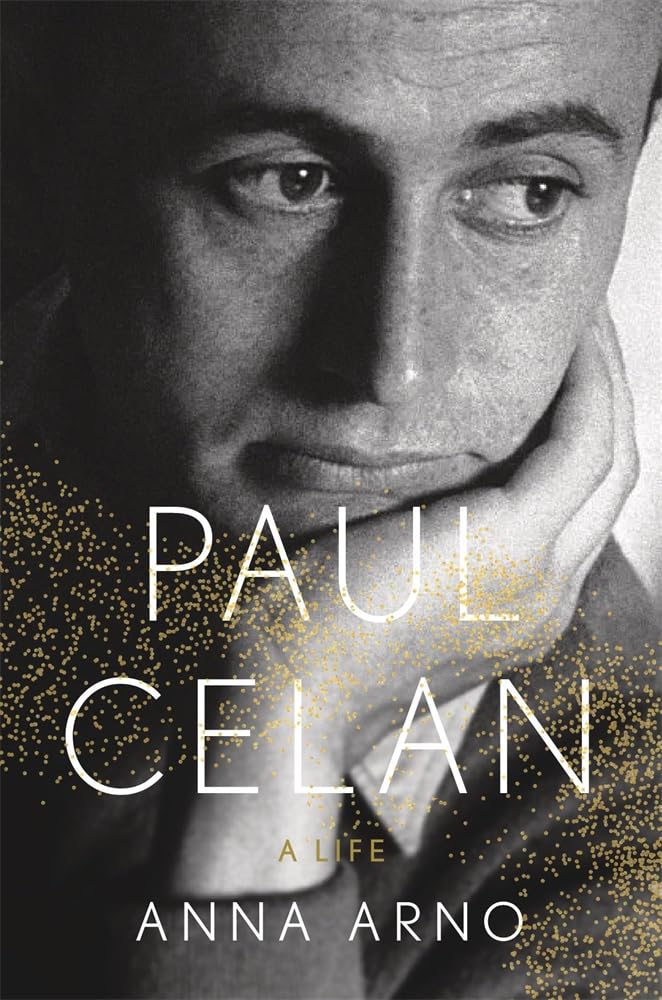
Paul Celan
A Life
Though Paul Celan's poems are widely appreciated, the richness of his life has escaped scholarly attention. Anna Arno pens the definitive biography of one of the twentieth century's great writers, exploring Celan's Jewish upbringing at the crossroads of European cultures, the ravages of the Holocaust, exile, and his struggles with mental illness.
Price: $35.00
 Forthcoming
Nonfiction
1873
The Rothschilds, the First Great Depression, and the Making of the Modern World
From the author of the Pulitzer Prize–winning Lords of Finance, a magnificent and timely reckoning with the first truly global financial calamity and the famous banking family at the center of the whirlwind
Over the course of the 1850s and 1860s, during the first era of globalization, the world experienced an unprecedented economic boom. Fueling this expansion was an explosion in the global bond market, at the hub of which stood one family—the Rothschilds, arguably the wealthiest banking family in history. While the giant sums of capital provided through the bond market built the railroads, the century’s most transformative investments, the money raised also unleashed a frenzy of speculation, massive overinvestment, and wasteful borrowing by governments.
With excessive euphoria leading to disappointed expectations, in the early 1870s the bubble burst. Stock markets from Vienna to New York crashed, and dozens of railroads and many governments defaulted. Financial officials responded by blundering into a precipitous remaking of the global currency system—exacerbating the ensuing economic collapse and setting the stage for decades of a punitive deflation that sparked waves of anti-globalist populism. As Liaquat Ahamed shows us in this enthralling history, the crisis of 1873 was, among other things, a death blow to Reconstruction in the United States and the proximate cause of the Ottoman Empire’s slow death spiral. Ironically, though the Rothschilds had presciently kept a low profile during the bubble, when the deluge came, they were viciously scapegoated as part of a wider hatred directed at “Jewish finance,” a strain of antisemitism that would come to full evil flower during the twentieth century.
1873 is a bird’s-eye reckoning with the full dimension of the crisis, from its buildup to its long aftermath. The Rothschilds and a cast of other witnesses give us the human perspective. And we have a brilliant financial historian’s grasp of the larger forces at play, resulting in a global narrative with thrilling explanatory power.
Price: $32.00
 Forthcoming
Nonfiction
The Jews and the Left
Why did Jews become devoted Democrats, and why did the Democrats turn on them?
For the past 100 years, Jews have famously been at the forefront of every liberal cause in America. They were overrepresented in the Civil Rights Movement, in the Labor movement, the pro-choice movement, and the LGBT movement. If you ask them why they are Democrats, many will say it’s because they are Jews.
And yet, as Batya Ungar-Sargon explains in The Jews and the Left, with its slogans about the destruction of Israel and elevation of antisemitic leaders, the Left has become a no-go zone for Jews unless they are willing to denounce their own people. Now the left has cheers when Zohran Mamdani says there shouldn’t be a Jewish state on this planet, and Bernie Sanders says Israel’s goal in Gaza is “extermination.”
To explore how we got here. Ungar-Sargon takes readers through the long history of Jews in American political life, from George Washington’s praise for the Jews to the forgotten Jewish Founding Father, from the Triangle Shirtwaist fire to the lynching of Leo Frank, from the Civil Rights movement to the shock many Americans felt on October 7th when Hamas wasn’t universally condemned.
Many Jews will insist that antisemitic violence has been more common on the right than on the left. The reality is far more complicated and far more troubling. This book analyzes a uniquely left-wing form of antisemitic hate. The Jews and the Left is a moving historical account of one of the most important alliances in American politics—and its breakdown.
Price: $30.00
 Forthcoming
Nonfiction
A Collector's Odyssey
How Marianne de Goldschmidt-Rothschild Saved Her Paintings from Nazi Looting
A Collector’s Odyssey presents a case of agency and moxie in the face of ruthless Nazi persecution and organized plunder. It reconstructs the untold story of wartime refugee Marie-Anne von/de Goldschmidt-Rothschild and ascertains the contents and trajectory of her art collection. Yet it is less about provenance, or transfers of ownership, than about one collector’s resistance to relinquishing ownership. Beginning with the collection’s inception in Berlin and spanning two World Wars, it traces artworks secretly relocated to Paris, haltingly transported to the U.S., exhibited there, repatriated, then quietly dispersed. Her in-laws’ respective cases of despoliation and exile further highlight what Jewish collectors faced in Nazi Germany. This book restores their stories to memory, countering the Reich's intended erasure.
Price: $113.00
 Forthcoming
Civil Society Resilience During War
Organizing Jewish Life And Culture In Ukraine After Russia’s Full-Scale Invasion
<p>This book explores the resilience of Jewish civil society organizing in Ukraine during the tumultuous early months of the 2022 Russian full-scale invasion. Developed in collaboration with Paideia - the European Institute for Jewish Studies in Sweden, the research chronicles a project that involved Ukrainian Jewish communities during wartime through Paideia’s alumni network. Drawing on rich empirical data, the authors examine the multifaceted work of Jewish organizations and organizing efforts, from sustaining rituals to engaging in humanitarian work. The book examines single case studies and broader cross-organizational analyses, shedding light on the capacity of Jewish groups to repurpose activities, pivot from serving specific communities to addressing broader societal needs, and mobilize resources under extreme conditions. This resilience, the authors argue, is shaped by a complex interplay of factors: pre-existing organizational structures, transnational networks, and the fusion of symbolic and material elements rooted in the Ukrainian-Jewish experience. By situating these efforts within a wider context, the book uses different streams of organization studies to provide an in-depth analysis of resilient civil society organizing during wartime. Aimed at organization scholars, civil society researchers, activists, and those interested in Jewish culture and Ukrainian history, this book offers critical insights into the possibility of civil society resilience in the face of war.</p>
Price: $37.99
 Forthcoming
Nonfiction
Voicing Britannia - Opera, Gender, and Jews, 1760-1830
According to a widely held view in eighteenth-century Britain, Britons were somehow inherently unmusical, and this supposed shortcoming was, in fact, a virtue. George Colman explicated this view when he wrote in 1762 that "for arts and arms, a Briton is the thing! John Bull was made to roar―but not to sing."
However, he was responding to an already changing cultural landscape. The 1760s saw the emergence of English-language opera, and the rise of a new generation of British singers ready and able to perform it. In response to long-held suspicions toward Italian opera and its singers, this turn was a bold attempt to offer British audiences a new vision of themselves: as a singing nation.
This is the book's central theme: the question of whether Britons could sing, and how it was negotiated in public discourse within an evolving cultural landscape. Drawing on a wide variety of primary sources, the text follows three groups of groundbreaking singers―high-pitched men, virtuosic prima donnas, and Jews―who sought to shift the landscape of opera in Britain, all the while challenging the prevailing gender norms and social categories. These attempts gave rise to a certain interplay―between an evolving cultural form seeking approval, and an insistent reticence that clung to the conventional. Eventually, the effort to adopt opera as a national vehicle, over a period of several decades, only helped to galvanize a guarded attitude toward music―an attitude that Britons were forced to admit was constitutive of their national identity.
Price: $105.00
 Forthcoming
Nonfiction
Hagiography in the age of mass publishing : Hasidic writing and the making of Jewish modernity
Taking an innovative approach to the study of religious literature and literary modernity, this book examines an overlooked body of texts – collections of Hasidic hagiographic stories about pious leaders, which were mass-produced during the nineteenth century – and makes a compelling argument for reading these works as a crucial part of modern Jewish literature. Despite criticism from members of the Jewish Enlightenment, who dismissed the leisure reading of these Hasidic booklets as lowbrow, the texts found a thriving audience in Eastern European Jewish society. In a nuanced study, Chen Mandel-Edrei challenges the conventional view of Hasidic literature as inherently anti-modern, and demonstrates how these popular stories presented a unique alternative path for Jewish modernity.Placing Hasidic storytelling and publishing in sociopolitical context, Mandel-Edrei centers the reading and writing practices of the ordinary people who drove the success of the hagiographic genre, particularly in Galicia following the 1848 revolutions. She analyzes how Hasidic writers actively engaged with modern political, philosophical, and aesthetic ideas, adapting them to their traditional way of life and reimagining concepts like individuality and communal identity. Deftly combining literary analysis and cultural history, this book illuminates the interplay between religion, mysticism, and the emergence of mass print culture, shedding new light on the history of Hasidism, Jewish literature, and modernity itself.
Price: $65.00
 Forthcoming
Nonfiction
The First Ghetto
venice and the origins of modern antisemitism
In the sixteenth century, amid the horrors of war, the Jews of Venice were forced to live in a fortress-like area known as the Ghetto. Born out of religious hatred and economic necessity, this was the first time the entire Jewish population of a city was segregated so completely. In the centuries that followed, the Venetian Ghetto would become the prototype for ghettos throughout Europe-and paved the way for modern antisemitism. But this is also a tale of hope. Against the odds, the Ghetto's residents thrived, creating a vibrant literary, musical, and religious community. They became essential to the survival of Venice itself-and as more Jewish refugees arrived, the Ghetto became a microcosm of the Jewish world. Tracing its story from its medieval origins to the present day, Alexander Lee explores the Ghetto through the eyes of its Jewish inhabitants, from the domestic troubles of a seventeenth-century rabbi to the agonizing wait of a family bound for Auschwitz. Authoritative, detailed, and timely, this definitive history not only shows what happens when war and economics collide with hatred-but also offers a powerful warning for the future
Price: $32.00
 Forthcoming
Nonfiction
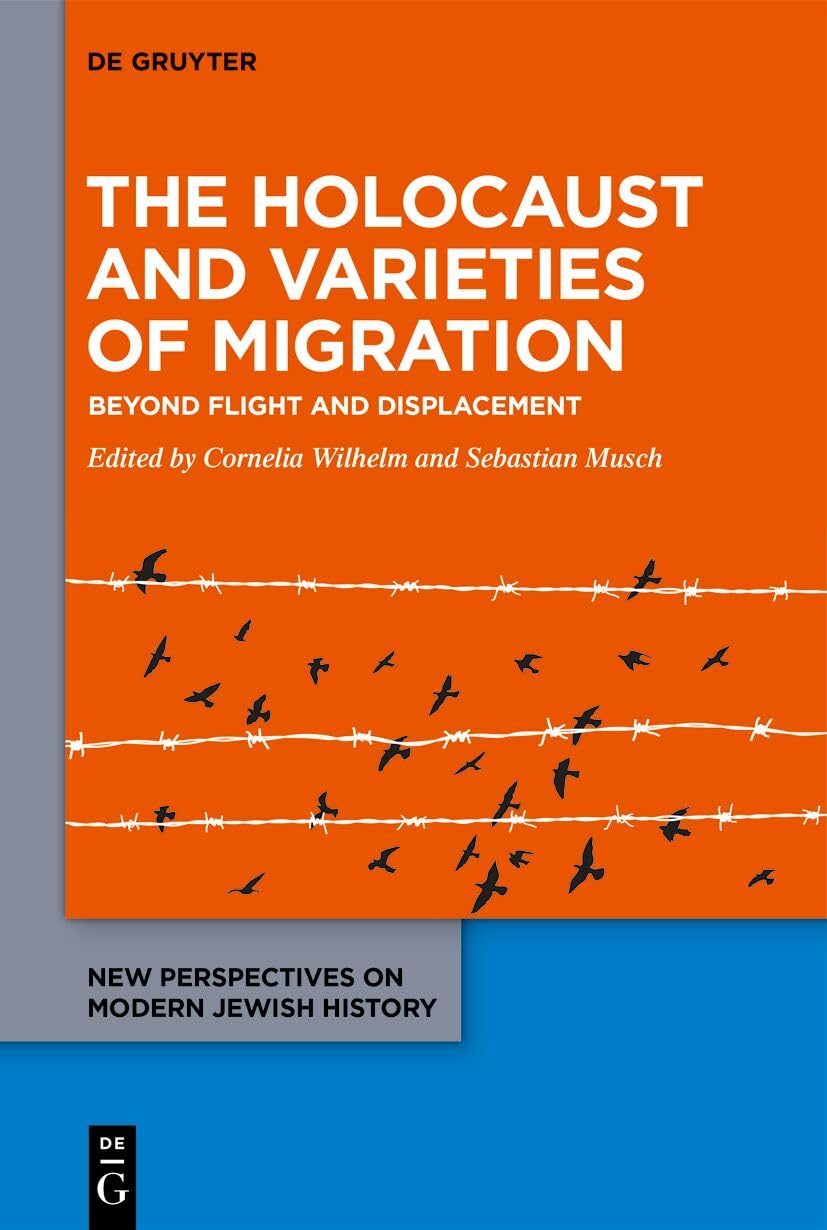
The Holocaust and Varieties of Migration
Beyond Flight and Displacement
This volume sits at the crossroads between Holocaust studies and the history of migration and examines how different forms of migration, broadly understood, were part of the preparation, organization, and execution of the Holocaust. Such a comprehensive analysis of the intersection between the Holocaust and phenomena of migration during this period is currently missing from historiography. Therefore, larger questions are addressed such as: How can research on migration during and after the Holocaust illuminate the latter and vice-versa? How did displacement affect vulnerability and complicity of populations and their memory? Were there opportunities for escape and flight from the Holocaust and under what circumstances? What roles played citizenship, gender, and race in the intersection of migration and the Holocaust? Did the destruction by the Holocaust also destroy the memory of those who were uprooted?
Price: $87.00
 Forthcoming
Nonfiction
What Is the Talmud?
The State of the Question
The Babylonian Talmud, or Bavli, stands as one of the central pillars of Jewish intellectual, cultural, and religious life. But what, precisely, is this monumental and heterogenous compilation? How was it formed, redacted, and transmitted? Who composed it and for what purpose? How was it shaped by its broader cultures and historical period? How was it received and re-conceived by subsequent generations, and what has the Talmud become in our day?
What Is the Talmud? collects essays that provide a comprehensive exploration of the Talmud’s origins, compilation, and redaction; its diverse genres and discursive practices; its historical and cultural setting; its preservation and study across generations; and its enduring influence on Jewish life and culture today.
Price: $39.95
 Forthcoming
Nonfiction
Sanctioned Bigotry
A Documentary History of Antisemitism In the United States
In a 1790 letter to Rhode Island Jewish leader Moses Seixas, President George Washington responded to Seixas’s concerns about Jewish persecution, assuring him that America “gives to bigotry no sanction, to persecution no assistance, [and] requires only that they who live under its protection should demean themselves as good citizens.” Historians have typically identified this letter as a symbol of American Jewish exceptionalism, the idea that Jewish life in the United States has been qualitatively distinct from, indeed better than, Jewish life in Europe.
Undergirding this idea is the claim that antisemitism has been a relatively minor force in American Jewish life. In this volume, Britt P. Tevis upends this narrative to reveal various manifestations of Jewish inequality in American history, highlighting the ways that Jews have encountered limited civil and political rights.
Using a remarkable array of primary sources, Tevis traces the history of antisemitism in the United States from 1654 to 2024. Comprising government reports, judicial decisions, correspondence, advertisements, cartoons, social media posts, and more, this documentary reader presents examples of antisemitism in nine overlapping categories: church and state, disenfranchisement, racialization, defamation, antisemitism and anti-Black racism, immigration and citizenship, exclusion and segregation, violence, and anti-Zionism. Tevis also shows how Jews have reacted to instances of inequality and have negotiated their place in America, both as individuals and as a community.
Collectively, these documents expose readers to the underexplored history of anti-Jewish discrimination in America, and the ways that Jews have championed and defended American ideals in the face of inequality.
Price: $45.00
 Forthcoming
Nonfiction
Women, Gender, and Sexuality in the Holocaust
This book presents a comprehensive introduction to the broad and developing field of women, gender, and sexuality in the Holocaust. Adopting a multi-disciplinary approach that incorporates global, gender fluid, and intersectional perspectives, it examines experiences of Nazi Germany, the Nazi-occupied territories, ghettos, camps, resistance and rescue, and partisan movements.
Women, Gender, and Sexuality in the Holocaust synthesizes fresh approaches and frameworks in Holocaust and gender studies research, addressing topics including female perpetrators, sexual violence, masculinity, and queer experiences. Rose introduces readers to interpretations from a wide range of fields, from film and photography to law and psychology. Recognizing the importance of understanding the events of the Holocaust in their historical context, the text begins with an examination of gender roles prior to the rise of the Nazis and expands to include the aftermath and the legacy of the Holocaust through the lens of gender and sexuality. With timelines and definitions of key terminology, this is an essential and accessible resource for students and scholars of the Holocaust, gender studies, and genocide studies as well as all those seeking a better understanding of this evolving discipline.
Price: $57.99

Fiction
Partly Strong, Partly Broken
Set in a suburban New Jersey interfaith community during the fall of 2023 and told through the eyes of the passionate, inclusivity-minded Rabbi Adinah, the novel unfolds as the shadow of Hamas’ gruesome attack on Israel and Israel’s subsequent devastation of Gaza looms over an already fractured community. The narrative opens with Rabbi Adinah returning from a summer in Haifa, only to find her synagogue literally falling apart: a hurricane has torn through the roof, and her office is flooded. Within her congregation, a new conservative member causes strife in her weekly Torah class, and differing opinions about Israel threaten to upend her authority. In the wider community, a young Syrian refugee she mentors lies in a coma, the victim of a brutal hate crime, and the treasured alliances she’s cultivated with leaders of other faiths become increasingly challenged.
Rabbi Adinah struggles to keep her community together while her foundational beliefs and closest relationships are tested. Through a kaleidoscope of characters, Nathaniel Popkin reflects the contemporary American experience, unraveling the existential consequences that political divisions pose to a community that has long offered strength, purpose, and belonging to all its members.
PARTLY STRONG, PARTLY BROKEN tackles questions that have fractured countless families, friendships, and communities even before October 7th. What does it mean to be a Jew in America today? How can the suffering in Gaza and Israel’s promise of refuge be reconciled? When core religious, personal and political values conflict, how do people respond? The novel doesn’t offer easy answers—but it grapples with these questions with urgency, intimacy, and honesty. By exploring them through fiction, Popkin captures the emotional and moral complexities, the nuances and contradictions, that are too often drowned out in rancorous debate.
Price: $19.95

Nonfiction
The King and the Commentator
Rashi's Holistic Readings of Solomon's Song, Proverbs, and Ecclesiastes
The writings attributed to King Solomon have long puzzled readers and scholars alike. How did these strikingly unconventional works – the passionate poetry of Song of Songs, the down-to-earth wisdom of Proverbs, and the existential reflections of Ecclesiastes – find their place within the sacred biblical canon? Their themes and tone seem worlds apart from the rest of Scripture. In The King and the Commentator: Rashi’s Holistic Readings of Solomon’s Song, Proverbs, and Ecclesiastes, Dr. Lisa Fredman offers a compelling answer based on Rashi’s commentary. Beneath the surface of Solomon’s works, Rashi uncovers deep theological insights and weaves them together into a single, coherent spiritual vision. The very works once questioned for inclusion in the biblical canon are shown to be vital expressions of faith, inviting readers to discover new dimensions of wisdom, holiness, and spiritual growth.
Price: $24.95
 Forthcoming
Fiction
Under the Crescent
A Novel
From one of the most courageous and controversial historians of our time comes an electrifying trilogy of novels—Moses, Eli, and Ghazal—that bring to life the vanished world of Middle Eastern Jewry and its dramatic dissolution under the rising tide of Arab nationalism and Islamist totalitarianism.
Bat Ye’or—“Daughter of the Nile,” exile of Nasser’s Egypt, and indomitable witness to the historical fate of Jews and Christians under Islam—has spent a lifetime unearthing hidden truths. Her nonfiction has challenged prevailing myths. Now, in this monumental work of fiction, she turns to the intimate and epic, portraying the human faces behind the centuries of dhimmitude—a status of legal and spiritual inferiority imposed on non-Muslims—and the slow, devastating collapse of a civilization.
Spanning the Cairo of the 19th century through the cataclysms of the World Wars to the final expulsion of Jews from Egypt in the 1950s, the trilogy follows three generations of one Jewish family whose members fight—through faith, rebellion, or resignation—to remain anchored in a homeland that steadily unravels around them. At once historical document and literary masterwork, this is a tale of memory and mourning, of identities stifled and voices rising, of lives swallowed by the Nile’s muddy tide and yet luminous in their witness.
With the moral clarity of Aleksandr Solzhenitsyn, the historical rigor of Primo Levi, and the lyrical power of Elsa Morante, Bat Ye’or renders an unforgettable account of the “numberless victims of history” and restores them to their rightful place in our collective memory. This is a story that had to be lived to be told—and must be told to be understood.
Price: $44.99
 Forthcoming
Nonfiction
A Thousand Miracles
From Surviving the Holocaust to Judging Genocide
When the Second World War began, Theodor Meron was a Jewish-born boy of just 9. He survived ghettos, camps and unimaginable atrocities, but lost most of his family, finding sanctuary in British Palestine after the Holocaust. Now, more than eight decades later, Judge Meron is a recognized world leader in both the scholarship and practice of international criminal justice--having served as the president of three UN tribunals, delivering landmark decisions on genocide and war crimes.<br> <br> This extraordinary memoir revisits Meron's time as a legal adviser to governments, often swimming against the tide; as a restless diplomat, a boundary-pushing scholar and ultimately a ground-breaking international judge. Meron has given his life to the service of justice. He is famous for his 1967 opinion finding Jewish settlements in the occupied West Bank to be illegal under international law, an opinion he issued as a legal adviser to Israel's Ministry of Foreign Affairs. More recently, he has advised the International Criminal Court on potential crimes in the Russia-Ukraine war, and in Israel and Gaza since 2023.<br> <br> The founding institutions of international justice today face unprecedented threats. Meron's life story could not be a better timed reminder of the importance of accountability.
Price: $34.99
 Forthcoming
Nonfiction
Israel: What Went Wrong?
The distinguished historian Omer Bartov was born on a kibbutz, grew up in Tel Aviv, and served in the Israel Defense Forces during the Yom Kippur War. He went on to become a leading scholar of the German army and the Holocaust, before turning his attention to his native country.
In Israel: What Went Wrong?, Bartov sketches the tragic transformation of Zionism, a movement that sought to emancipate European Jewry from oppression, into a state ideology of ethno-nationalism. How is it possible, he asks, that a state founded in the immediate aftermath of the Holocaust, an event that gave legitimacy to a national home for the Jews, stands credibly accused of perpetrating large-scale war crimes? How do we come to terms with the fact that Israel’s war of destruction is being conducted with the support, laced with denial and indifference, of so many of its Jewish citizens?
Tracing the roots of the violent events currently unfolding in Israel and the occupied territories, Bartov tracks his country's moral tribulations and considers the origins of Zionism, the intertwining of Israel’s independence with Palestinian displacement, the politics of the Holocaust, controversies over the term "genocide," and the uncertain future. The result is a searing and urgent critique that addresses today’s debates over Zionism and the future of Israel with rigor and depth.
Price: $28.00
 Forthcoming
Nonfiction
The Hidden Hand
The Information War and the Rise of Antisemitic Propaganda
October 7th, 2023 was a truly horrific day—a day in which Israeli men, women, and children were slaughtered or kidnapped, in the most barbaric fashion possible by the Iran-backed, Gaza-based terrorist group Hamas. The attack set off a bloody war, with profound consequences for both Israelis and Palestinians. That much is well known.
Less known is the propaganda campaign—the narrative war—that also began on that day. Like Hamas’ war on Israel, the narrative war had been in the works for a long time. It took, and continutes to take, planning, organization, and lots of money. Paid protestors. Professional organizers. Top-notch lobby efforts. NGOs, unions, and associations working together like a well-oiled machine. And, of course, messages designed to capture the support of legislators, voters, and the media.
There is little, if anything, organic about this campaign, even if some of its own participants aren’t quite aware of it.
Interestingly, Canada has become ground zero for this international effort, a result of shifting demographics, porous online and physical borders when it comes to foreign interference, lack of political will, and failure to enforce laws that could help prevent the spread of this type of hate. The numbers themselves are astounding, reflecting a growing tide of antisemitism, anti-Zionism, and general intolerance with a brazenness that has not been witnessed before. A country known for its historic support for the Jewish homeland and for Jews in general has become, since October 7th, a place where Jews live in fear, with skyrocketing incidents of vandalism, violence, threats, and intimidation.
A highly successful political strategist, and legal advocate for victims of hate, Warren Kinsella deconstructs the inner workings of this campaign of hate, and pulls no punches as to what is at stake here: the further spread of antisemitism within society—especially amongst the younger generations but certainly not limited to that demographic—and how to offset it.
Price: $30.00
Fiction
Odessa
A Novel
Odessa, 1905. Yetta is a bright, quick teenage girl with a wild, searching spirit. Stifled by her home, her mother's anxiety, her father's rules, and the path that's been laid out for her, she craves the kind of freedom she doesn't know the edges of. But her family has reason to be cautious and restrictive. Fear has wrapped itself around their shtetl. Jews are mysteriously disappearing, and there are whispers of an impending Gentile attack. When the violence arrives at their door, Yetta is killed. Her father, in his grief, fumbles through his nascent knowledge of ancient texts and dark magic to bring her back. By some miracle, Yetta is returned. Although she looks the same, Yetta is not the girl she once was: she is impossibly strong and unceasingly dutiful. And her father begins to see signs he has done something very wrong. Yetta knows there's a secret her father isn't telling her. The answer resides, in part in the monstruous being stalking the villagers and their enemies, lurking in the woods beyond the shtetl, something that may also be of Mordechai's own making, and a being which has plans of its own.
Price: $29.00
 Forthcoming
Nonfiction
The Jewish Maghreb
North African Experiences in Greater Paris since 1981
Homogenization, Monochromatic Rendering, And The Process Of Schematic Imposition Is Readily Apparent In Modern Mainstream Jewish French Politics. The Jewish Maghreb Explores Complex Self And Communal Understandings Of Maghrebi Jewish Populations And Their Descendants In France Through Ethnography Across Generations. This Study Examines How Colonial History, Migration, And Geopolitics Shape Ongoing Maghrebi Belonging. From Commercial Networks In Paris To Algerian Pilgrimage Journeys, The Book Reveals Communal North African Jewish Navigation Of Plural Sediments Of Self And History. The Heuristic 'maghrebinicité,' Works To Illuminate Ongoing Negotiations Of Memory, Citizenship, And Cultural Transmission In Postcolonial France, Offering Fresh Insights Into Diaspora, Return, And The Persistence Of Transnational Connections.
Price: $24.95

Nonfiction
If You're Reading These Words
Last Letters from the October 7th War
If You’re Reading These Words is a first-of-its-kind collection of forty-nine final letters from soldiers who fell in the war that broke out on October 7th, 2023. These letters contain dark humor and inside jokes, searing honesty and scorching love, fear of death and blinding courage. There is drama in them, and also escape from drama – spelling mistakes and pleas for forgiveness, expressions of gratitude and even concrete instructions for the day after.Most of these letters have never before been published. This literary documentary collection of last words is a piece of history being writtennow, in the words of young fighters who inscribed with their own bloodnew chapters in the story of Israel.
Price: $17.95
 Forthcoming
Nonfiction
The Future Is Peace
A Shared Journey Across the Holy Land
"Palestinian Aziz Abu Sarah and Israeli Maoz Inon are unlikely peacemakers, dedicated to finding a solution to the bitter war that has decimated historical, ancient land and ended family lines. Despite the losses they have suffered, the resolve of their friendship has taught them that strength and unity are more powerful than the violence of separation. Throughout their travels, they have been constantly asked: In the face of so much pain and suffering on both sides, when there have been so many lives lost and families shattered, how can they ever find hope? Their answer is always the same. One cannot find hope. We must create it. In The Future Is Peace, Sarah and Inon take readers on their unforgettable weeklong journey across the holy land while exploring each other's personal and national histories in a land of competing narratives, amid the turbulent push and pull of near constant war, and the recent devastation that has rocked the world. Their mission-to explain the naivete in believing that more violence can bring security and prosperity to either people while in search of a true and lasting peace. Pairing unapologetic candor and inspirational prose, Sarah and Inon are sending a message to humanity that the people have the power to make change. Peace is achievable, not just between the river and the sea, but throughout the world"-- Provided by publisher.
Price: $30.00
 Forthcoming
Nonfiction
Kafkaesque
Ten Great Writers Translate the Twentieth Century
"What happens to a writer's work when it is translated–specifically, what happens if his name is Franz Kafka?"
In Kafkaesque, Maïa Hruska traces the strange, shape-shifting legacy of one of literature’s most elusive figures—not through traditional biography but through the lives of his earliest and most influential translators. With rigor and élan, she shows us how our understanding of Kafka is inevitably filtered through these voices, many of whom were, or would become, major writers and thinkers in their own right.
Jorge Luis Borges rendered Kafka into Spanish, recognizing in him a fellow architect of the infinite. Primo Levi used the German he acquired in a concentration camp to bring The Trial into Italian despite the “psychoanalytic repulsion” he felt toward Kafka. Bruno Schulz published his Polish edition of the same novel before being shot by a Nazi officer. Vladimir Nabokov annotated The Metamorphosis in exile, having undergone his own transformation–from native to foreigner. Milena Jesenská, Kafka’s great love, translated him into Czech, a language he was both surrounded by and estranged from.
What emerges across these essays isn’t just a portrait of a legendary writer and his translators but also a portrait of the twentieth century itself—its fractures and displacements, its aesthetic revolutions, its ethical crises. Part cultural history, part group biography, Kafkaesque is a dazzling meditation on language, identity, and the irreducible strangeness of reading and being read.
Price: $27.99
Nonfiction
The Portrayal Of Pagan Worship In The Hebrew Bible And Ancient Judaism
How did Jews in the ancient world depict the practices of their pagan contemporaries? In this study, Jesse Mirotznik investigates the portrayal of pagan worship in the Hebrew Bible and ancient Jewish literature. Scholars have assumed that the portrayals in these corpora are consistent over time. Mirotznik, however, shows that there is a fundamental discontinuity between earlier and later depictions of pagan worship. In the Hebrew Bible, these forms of worship are, for the most part, simply assumed to be sincere. By contrast, in ancient Jewish texts from approximately the end of the third century BCE and onward, such worship is increasingly presented as insincere, performed only instrumentally in the service of an ulterior motive. While the worshipers of other gods seem genuine in their devotion, these texts contend, they too must recognize the folly of such worship.
Price: $130.00
 Forthcoming
Nonfiction
Just Language
Walter Benjamin, German-Jewish Exile, and the Critique of Linguistic Violence
Just Language revisits the Weimar period and its representation in the postwar years to explore narratives of linguistic resistance in the works of Walter Benjamin, Theodor W. Adorno, Hannah Arendt, and Paul Celan. How did this generation of exile writers grapple with their experiences of oppression and persecution? How did they create a language of resistance during the decades that prepared the Third Reich and the Shoah?
Facing the devastations of World War I, the book explores how Walter Benjamin analyzed language’s ability to radically break the cyclical violence of war and examines his opposition to expansionism and imperialism in Weimar education and culture. Based on Benjamin’s analysis, Johannßen traces the postwar responses of Hannah Arendt and Paul Celan. While Arendt proposed strategies of metaphorical thinking to counteract the formation of totalitarianism, Celan mobilized silence as a poetic counterforce against oppression and erasure. Just Language argues that every linguistic act and practice, no matter how small or marginalized, entails the ethical task of opposing the normalization and institutionalization of political violence. By tracing how Benjamin and his interlocutors struggled against German fascism, Johannßen presents a memory-based critique of linguistic violence, opening a dialogue between German-Jewish writers and today’s debates on nondiscrimination, propaganda, and social justice.
Price: $34.45

Fiction
The Last Woman of Warsaw
A debut novel by the critically acclaimed New York Times bestselling author of The Light of Days, following two very different Jewish women in Warsaw in the late 1930s as they unexpectedly come together in their search for love, meaning, and a sense of home, and as they grapple with the storm clouds gathering around them 1938: Fanny Zelshinsky is a sophisticated, modern daughter of the city’s Jewish elite who wants nothing more than to be recognized as a legitimate artist by her family, her radical professor whom she idolizes, and the world at large. And all while she wonders if she is really going to go through with her wedding. Meanwhile, Zosia Dror has left behind her small northeastern shtetl and religious family in the wake of violence. Part of a budding youth movement that believes in social equality and creating a Jewish homeland, all she wants is to not get distracted by the glitz and hubbub of the city—or by the keen eyes of a certain tall, handsome comrade. When legendary artist Wanda Petrovsky—both a member of Zosia’s movement leadership and Fanny’s beloved photography professor—goes missing, the two young women are thrown together in the pursuit of the elusive firebrand. Is Wanda simply hiding, or is her disappearance connected to the rise in antisemitic laws and university practices? Fanny and Zosia may be the most unlikely of allies, but they must bridge their differences to help someone they both care for—and dodge the danger mounting around them in the process.
Price: $30.00
Nonfiction
Here Where We Live Is Our Country
The Story of the Jewish Bund
This story begins with Molly Crabapple's discovery of the art and ephemera left behind by her great-grandfather, Sam Rothbort. Sam was a rough-and-tumble kid who worked at a tannery deep in the Pale of Settlement in 19th century Russia. As a young man he discovered that he was not just a laborer, but an artist--and soon after that, a revolutionary, enlisted in the strikes, street fights, and study groups of a new group of radicals sweeping the Pale: the Jewish Bund. Crabapple saw herself not just in her great-grandfather's career as an artist, but in his revolutionary inclinations. In the story of the Bund, she discovered a movement of artists, philosophers, working people, and street fighters with a thrilling utopian vision for the world. The founders of the Bund understood themselves as Jews--people with a special history of oppression--but also as part of an international movement that rejected all forms of ethnonationalism. They fought for this vision in parlors, cafes, battlefields and prison camps. Their ideas helped spark the Russian Revolution, which soon swept them aside. Their fighters battled pogromists in an age of nationalism and their leaders tangled with Zionists over the destiny of the Jewish people. Their last stand was in Nazi-occupied Warsaw, where they helped lead a doomed uprising, the heroic and tragic climax to their story. In retelling the epic history of the Bund and its extraordinary cast of characters during one of the most politically and culturally volatile periods in European history, Crabapple asks a critical question: did the Bund fail because of an unworkable dream of solidarity? Or did the world, in thrall to zero-sum nationalism, fail the Bund? This dynamic story is driven by that urgent question--and offers a new lens through which to see our contemporary struggles.
Price: $32.00
 Forthcoming
Nonfiction
Judeophobia
A History
Throughout the history of the Western world, Jews have suffered various forms of exclusion, stigmatisation, and discrimination that have forced them always to be aware of their very particular situation. The Jews became a community under siege and, as Shlomo Sand argues, Judaism was shaped by the hostile gaze of Christian civilization. While the forms of hostility endured by the Jews have varied over the centuries, it is impossible to understand twentieth century anti-Judaism, or Jewish identity itself, without taking account of the sediments of mental hatred, fuelled by religious belief, which have survived the passage of time. While antisemitism is the term commonly used today, Sand prefers ‘Judeophobia’, which predates the appearance of ‘antisemitism’ and is more precise. Looking back over the centuries, he seeks to identify some of the stages in the age-old, incandescent hatred of the Jews and tries to understand what remains today of this trenchant hostility. He also questions whether Zionism, born as a distressed response to modern Judeophobia, has ended up mirroring it. To what extent has Zionism inherited the ideological foundations that have always been characteristic of the persecutors of the Jews? This concise history of anti-Jewish hatred will be of great interest to anyone concerned with one of the most insidious and persistent features of Western civilization. Throughout the history of the Western world, Jews have suffered various forms of exclusion, stigmatisation, and discrimination that have forced them always to be aware of their very particular situation. The Jews became a community under siege and, as Shlomo Sand argues, Judaism was shaped by the hostile gaze of Christian civilization. While the forms of hostility endured by the Jews have varied over the centuries, it is impossible to understand twentieth century anti-Judaism, or Jewish identity itself, without taking account of the sediments of mental hatred, fuelled by religious belief, which have survived the passage of time.
While antisemitism is the term commonly used today, Sand prefers ‘Judeophobia’, which predates the appearance of ‘antisemitism’ and is more precise. Looking back over the centuries, he seeks to identify some of the stages in the age-old, incandescent hatred of the Jews and tries to understand what remains today of this trenchant hostility. He also questions whether Zionism, born as a distressed response to modern Judeophobia, has ended up mirroring it. To what extent has Zionism inherited the ideological foundations that have always been characteristic of the persecutors of the Jews?
This concise history of anti-Jewish hatred will be of great interest to anyone concerned with one of the most insidious and persistent features of Western civilization.
Price: $19.95

Nonfiction
The Pickled City
A Biography of New York Pickles
The Pickled City takes a glorious deep dive into the history of the iconic brined cucumber by tracing the pickle’s journey from ancient Mesopotamia to Eastern Europe to Manhattan’s Lower East Side, unearthing a hidden world of family stories and economic contributions that helped shape New York’s cultural, culinary, and literal foundations.
With a foreword by pickle pioneer Sandor Katz and an astonishing wealth of photographs, historical images, documents, illustrations, advertisements, and more.
Price: $26.95

Nonfiction
Galicia as a Literary Idea
Jewish Eastern Europe in the Writings of Joseph Roth and Soma Morgenstern
In the decades following the dissolution of Austria-Hungary, the former province of Galicia inspired the literary imagination of two German-language natives of this region, Joseph Roth and Soma Morgenstern. Galicia as a Literary Idea explores what their engagement with Galicia means for modern Jewish culture, history, and memory.
For Roth and Morgenstern, Galicia encapsulates the rich interplay between contemporary developments – including urbanization, secularization, embourgeoisement, political self-determination, and new technologies – and traditional Jewish life in Eastern European villages and shtetls, characterized by tight-knit families and communities, religious observance and ritual, Yiddish language and culture, and Hasidic belief systems. Despite the tensions between these elements, this book presents them as a complex network rather than a battle between old and new, east and west, or tradition and modernity. German and Jewish studies scholar Kata Gellen also traces the shifting attachments of Galician Jews to German, a language that symbolized emancipation, culture, empire, and, ultimately, disillusionment and persecution.
Through original readings of well-known and neglected works by Roth and Morgenstern, Gellen shows how the literary idea of Galicia is shaped by continuous struggle and emergent hope, whether as earthly possibility or redemptive promise. This book thereby uncovers the complex relationship between center and periphery in Jewish modernity and reanimates a dimension of modern Jewish literary history that has been obscured by the dark shadow of the Holocaust.
Price: $95.00
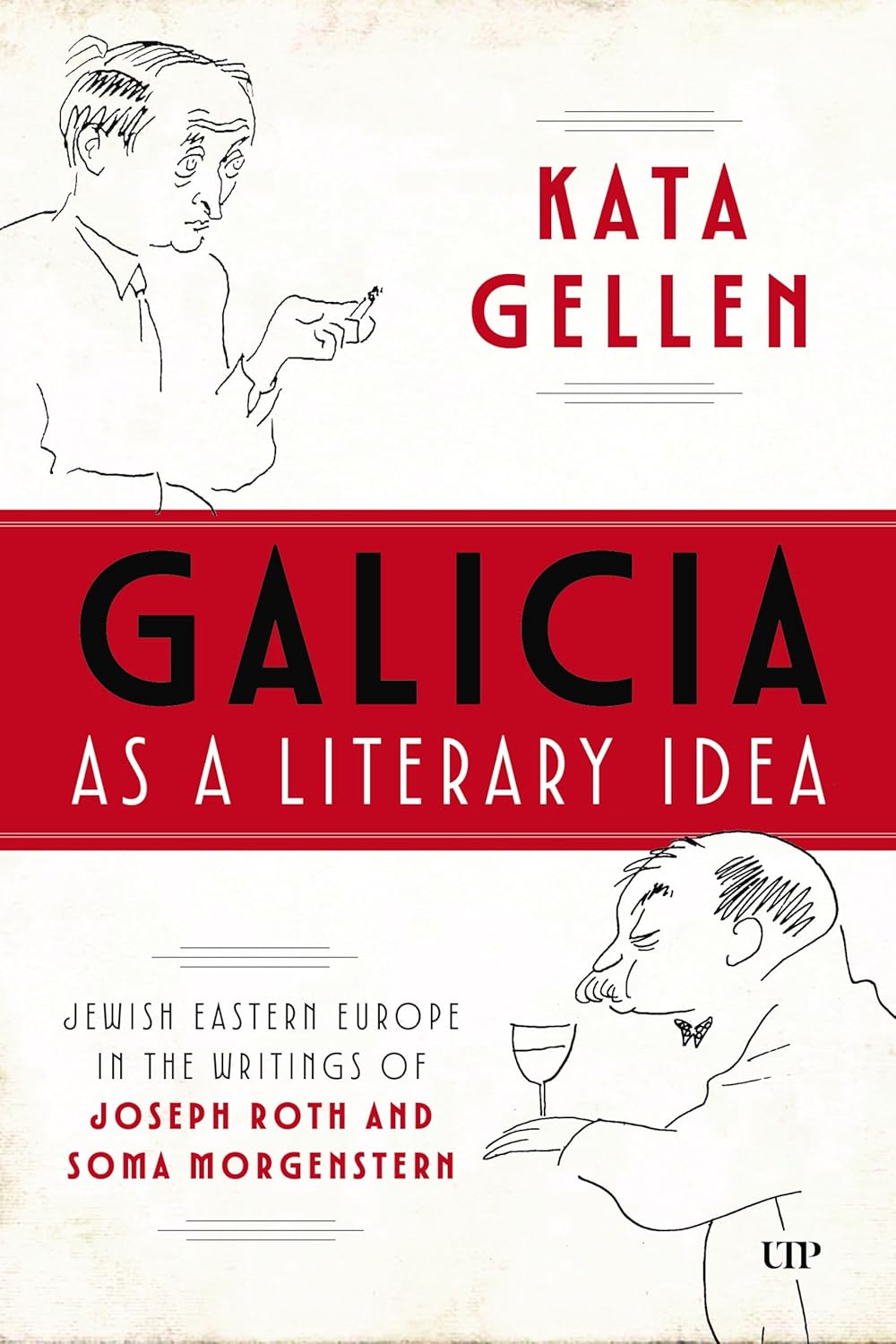
Nonfiction
Galicia as a Literary Idea
Jewish Eastern Europe in the Writings of Joseph Roth and Soma Morgenstern
In the decades following the dissolution of Austria-Hungary, the former province of Galicia inspired the literary imagination of two German-language natives of this region, Joseph Roth and Soma Morgenstern. Galicia as a Literary Idea explores what their engagement with Galicia means for modern Jewish culture, history, and memory.
For Roth and Morgenstern, Galicia encapsulates the rich interplay between contemporary developments – including urbanization, secularization, embourgeoisement, political self-determination, and new technologies – and traditional Jewish life in Eastern European villages and shtetls, characterized by tight-knit families and communities, religious observance and ritual, Yiddish language and culture, and Hasidic belief systems. Despite the tensions between these elements, this book presents them as a complex network rather than a battle between old and new, east and west, or tradition and modernity. German and Jewish studies scholar Kata Gellen also traces the shifting attachments of Galician Jews to German, a language that symbolized emancipation, culture, empire, and, ultimately, disillusionment and persecution.
Through original readings of well-known and neglected works by Roth and Morgenstern, Gellen shows how the literary idea of Galicia is shaped by continuous struggle and emergent hope, whether as earthly possibility or redemptive promise. This book thereby uncovers the complex relationship between center and periphery in Jewish modernity and reanimates a dimension of modern Jewish literary history that has been obscured by the dark shadow of the Holocaust.
Price: $95.00
Nonfiction
Psychoanalysis, Poetic Testimony and the Trauma of the Holocaust
In this fascinating and innovative book, Rina Dudai looks at Holocaust trauma through the lens of poetic testimony: the act of writing poetry and prose to both relay and process traumatic events.
Dudai begins with a study of both factual testimony and the act of bearing witness in the aftermath of trauma. She uses these as the foundations for her exploration of poetic testimony and the benefits the creator will find over and above other forms of testimony. Showing how this method avoids the additional trauma often brought about by making survivors directly address their experience, Dudai offers a new toolkit to psychoanalysts and psychotherapists working with patients experiencing trauma. Through an analysis of the works of three writers who survived the Holocaust – Primo Levi, Ka-Tzetnik, and Aharon Appelfeld – Dudai establishes a conceptual framework for discussing this mode of testimony and the poetic language through which it speaks. By comparing the work of these writers, Dudai identifies the distinct qualities of this form of poetic language while establishing a foundation for discourse of other literary works that deal with trauma.
Through close textual analysis and the incorporation of therapeutic concepts like "acting out" and "working through," Psychoanalysis, Poetic Testimony, and the Trauma of the Holocaust is an invaluable resource to psychoanalysts and other mental health professionals working with trauma patients, as well as students and scholars of literature and 20th-century history.
Price: $47.99

THE DUBROVNIAN STORY
The Fortress On The Adriatic

Nonfiction
Bridge Builder
My Life Since the Holocaust
Bridge builder: My life since the Holocaust is the fourth and final volume of Shimon Redlich's autobiographical cycle, which began with Together and Apart in Brezany (2002), a description of relations among Poles, Ukrainians and Jews in his native town and his survival during the Holocaust. It continued with Life in Transit (2010), an account of his family's resettlement in postwar Lodz and a new life in Israel. A New Life in Israel (2018) portrayed his adjustment to life on a kibbutz and service in the Israel Defense Forces. In Bridge Builder, Redlich recounts his life since the late fifties. It features his academic journey from student in Jerusalem and the US to professor at Ben-Gurion University, his friendships, his encounters with Jews and non-Jews in Eastern Europe, and his unconventional approach to controversial topics. As in previous volumes, in Bridge Builder Redlich's own memories are supported and enriched by meticulous historical research.
Price: $36.10

Nonfiction
Forest as Commemoration in Jewish-Israeli Memory Culture
A Study in Environmental Memory
Situated within the broadly understood subfield of environmental memory studies, this book explores Israeli forests as spaces of commemoration. It investigates their significance in the Jewish‑Israeli memory culture over the last century, as well as their role as a recurrent form of environmental memorial, understood as a commemoration that uses the organic as both the symbolic and the building substance. In doing so, it reveals the roles that the natural environment plays in memory practices: as a carrier of symbolic meanings, and also as an acting, more‑than‑human element of memorial spaces.
Employing the perspective of environmental hermeneutics, the analysis is grounded in the realities of the Israeli–Palestinian conflict and reflects on the intricate intersection of ideological, political, socio‑economic, personal, and institutional dimensions of local tree planting. Simultaneously, it draws from instances of arboreal commemorations found in other geographical and cultural contexts, situating the practice of memorial forests within the wider framework of environmental memory and its associated social practices. In this way, it offers instructive insights for other cases of arboreal remembrance, highlighting both the potential benefits and risks linked to environmental memorials.
Utilising an interdisciplinary approach, this fascinating and groundbreaking volume will engage scholars and researchers from a wide range of disciplines, including Memory Studies, Cultural Geography, Israel Studies, and Environmental Humanities.
Price: $61.99

Nonfiction
Was it Just a Matter of Luck?
A Family, the Holocaust, and the Founding of a Museum
Intimate in voice and sweeping in historical reach, "Was It Just a Matter of Luck?" bears witness to the endurance of memory and the moral force of survival. Through the voice of his mother, Ray Kaner - a fiercely intelligent young woman who endured four years in the Lódź ghetto, brutal slave labor, and near death in Bergen-Belsen - Dr. Charles Kaner reconstructs her harrowing passage through the Holocaust and the sustaining power of sisterhood that helped her survive.
Interwoven with his own journey as a second-generation survivor, Kaner traces how Ray transformed unspeakable trauma into purpose. In postwar America, she became a quiet but determined force in the preservation of Holocaust memory, helping to establish one of the nation's earliest survivor-testimony projects and laying crucial groundwork for what would become the Museum of Jewish Heritage. At once a son's act of devotion and a profound historical reckoning, Was It Just a Matter of Luck? asks not only how one woman survived, but how survival itself became a legacy.
Price: $24.95

Nonfiction
Mordecai M. Kaplan
Restless Soul
An engaging biography that goes behind the myths to reveal the complex life of a transformative figure in modern American Judaism
Rabbi, writer, teacher, and thinker, Mordecai M. Kaplan (1881–1983) was one of the leading Jewish personalities of twentieth-century America. Founder of the Reconstructionist movement, he was a maverick who reshaped religious faith and practice, generating controversy at every turn. Known for his relentless energy and imagination, Kaplan redefined Jewish identity, emphasizing reason over superstition and intellectual discovery over passive inheritance. He introduced new rituals, reevaluated the role of tradition, and advocated for a Judaism that evolved with the times and fostered an inclusive community. Drawn extensively from Kaplan’s private diaries and correspondence with family and close friends, Jenna Weissman Joselit’s intimate portrait of this influential and iconoclastic thinker sheds new light on the meaning of American Judaism, identity, the limits of belonging, and the role of faith in modern society.
Price: $32.50

Nonfiction
The Oxford Handbook of Jewish Philosophy
This Handbook provides an examined and nuanced overview of the history and devlopment of Jewish philosophy, from antiquity up to current trends in the field. Editors Paul W. Franks and Yitzhak Y. Melamed have brought together an international team of philosophers and scholars to tackle a complex and multi-layered literary corpus that stretches over two millennia. This volume is comprised of six divisions, each telling the story of Jewish philosophy from a distinctive vantage point: an introductory section addressing the place and historiography of Jewish philosophy within broader academia; the history of Jewish philosophy with an eye towards major schools and periods; interactions between Jewish philosophy and other branches of the Jewish literarary tradition; interactions with non-Jewish philosophy; key topics in Jewish philosophy; and new directions in the field. The result is a uniquely comprehensive and multi-layered survey of this incredibly important intellectual tradition. Drawing from thinkers at the top of their field and edited by two of the most important philosophers working today, this Handbook is the authoritative guide to the history, development, and trajectory of Jewish philosophy.
Price: $205.00
Fiction
My Lover, the Rabbi
By Guggenheim Fellow and Distinguished Professor at the CUNY Graduate Center Wayne Koestenbaum, a novel chronicling the increasingly obsessive psychosexual relationship between a rabbi and the man devoted to him, an entanglement with unpredictable consequences for the two men and those around them
Price: $19.00

Nonfiction
The Story of the Jewish Legion
This is a story of fighting men, struggling in a great cause. The Jewish Legion was organized and fought in the First World War, their goal the securing of The Land of Israel as a Jewish National state. But his story can not be told without telling also of British imperial intrigue, of promises lightly given and lightly broken, of the injustice founded in opportunism and confirmed by decree.
Founder and guiding spirit of the Jewish Legion and architect of the plan for a Jewish army was Vladimir Jabotinsky (1880-1940). He has written his story simply and faithfully, giving praise to the men who
Price: $22.95

Nonfiction
Farbrengen
Hasidic Gatherings with Rabbi Steinsaltz
Over the years, Rabbi Adin Even-Israel Steinsaltz held farbrengens – gatherings held for the purpose of spiritual elevation – that marked special occasions in the calendar. Such gatherings were opportunities to eat together, drink lehayim together, sing together, and talk about serving God.
In this book, we find a collection of ideas that Rabbi Steinsaltz discussed at these gatherings with his students and others who came to be elevated by the experience. Through the texts presented here, the reader is invited to participate vicariously in a hasidic gathering with Rabbi Steinsaltz: to encounte
Price: $34.95

Nonfiction
Beyond the Elite
Everyday Jewish Lives in Medieval Northern Europe
Beyond the Elite focuses on the everyday social history of Jews in medieval northern and central Europe using four interpretive lenses: people, space, objects, and rituals. Contributors to this innovative volume discuss aspects of daily life through which non-elite Jews interacted with their Christian neighbors, while at the same time creating and affirming their own religious, social, and cultural identities. This volume makes possible a multifaceted understanding of different perspectives on Jewish life, demonstrating the extent to which medieval Jews were simultaneously integral to majority-Christian communities and also strangers within them.
Based on scholarship conducted during a multiyear, team-conducted research project, Beyond the Elite addresses topics such as orphanhood, social exclusion, travel by river, local power struggles, architectural styles, pawnbroking, wedding customs, and religious rituals. More broadly, in detailing the rhythms of daily life during times of relative calm for Jewish communities, it becomes clear that anti-Jewish persecution and violence from the late thirteenth century was both manifested within and a rupture of existing social orders.
Contributors: Tzafrir Barzilay, Elisheva Baumgarten, Neta Bodner, Nureet Dermer, Aviya Doron, Albert Evan Kohn, Miri Fenton, Annika Funke, Ariella Lehmann, Andreas Lehnertz, Eyal Levinson, Ido Noy, Erez Rochman, Miri Rubin, Hannah Teddy Schachter, Amit Shafran.
Price: $36.95

Nonfiction
Nahmanides
An Intellectual Biography
In this innovative intellectual biography, Oded Yisraeli offers an unprecedented, comprehensive portrait of Rabbi Moses b. Nahman, or Nahmanides (1194-ca. 1270), one of the greatest Jewish thinkers and writers of the Middle Ages. Nahmanides' creative energy spanned his long life, covering diverse fields - Talmudic and halakhic exegesis, biblical commentary, Kabbalah, homiletics, polemics, and poetry - that have all individually been the object of extensive scholarly study. This book brings the many facets of Nahmanides' work together, and breaks new ground by relating the circumstances of his life to the long arc of his intellectual career. Yisraeli examines Nahmanides' oeuvre in light of his time and place, reading his writings as a discourse with both movements within the Jewish world of his day and the lively scholasticism of thirteenth-century Western Europe. He takes account of changes over time both in the religious world around Nahmanides, and in his doctrine throughout his career, raising new questions about Nahmanides' work and the influences on his thought. Rooted in deep historical research and attention to social context, this book offers a new historical and biographical perspective that illuminates Nahmanides' religious and intellectual world.
Price: $60

Fiction
The Collected Works of Esther Kreitman
Esther Kreitman’s fiction explores the realities of Jewish life in Europe in the first half of the twentieth century. Uncompromising in her critique of injustice and hypocrisy, she exposes the emptiness of those who maintain nothing of Judaism but rituals devoid of meaning. She insists on the dignity of those denied opportunity: the poor, women, and all excluded from modern education. Her characters love and work, despair and rebel as they move through the streets and homes of the shtetl, Warsaw, Antwerp, and London.
Price: $44.95

Nonfiction
When We're Born We Forget Everything
A Memoir
As a self-described ‘90s suburban high school weirdo, Alicia Jo Rabins spent her time practicing violin and smoking cigarettes behind the mall while secretly dreaming of setting out on a spiritual quest no one around her seemed to understand. She often found herself drawn to the more ritualistic and rigorous Judaism that her parents had abandoned to assimilate and “become American.” In college, a chance meeting led her on a pilgrimage to Jerusalem to study rabbinical texts (and play bluegrass fiddle on the street for cash). But that two years of immersing herself in traditional observance was only the start of a journey full of twists and turns.
When We’re Born We Forget Everything follows Alicia’s relentless, often embarrassing, sometimes enlightening search for the sacred in everyday life as she tours America playing with a klezmer-punk band, falls in and out of love, scrapes through the initiations of motherhood, and witnesses the beauty—and danger—of mysticism. Rabins braids this personal narrative with the hidden stories of biblical women, uncovering a path of queer identity, feminist awakening, and spiritual self-invention. This lyrical, searching memoir is a meditation on longing, lineage, and what it takes to find meaning in a fractured world.
Price: $30.00

The Echoes of Egypt Haggada
Echoes of Egypt: A Haggada
“In every generation a person must see himself as if he himself came out of Egypt.”
This Haggada draws on the rich visual world of ancient Egypt to illuminate the Exodus as a theological and ideological revolution. More than a passage from slavery to freedom, the story we tell is a protest against empire, a rejection of tyranny, and the birth of a new vision of time, power, and human worth. Echoes of Egypt is a visually sumptuous journey that helps us grasp what our ancestors saw, felt, and resisted – and invites us to see ourselves in their story anew.
Price: $29.95
 Forthcoming
Nonfiction
Fear, Fear of God, God-Fearers
Philological and Historical Perspectives on the World of Ancient Judaism and Christianity
The contributors to this volume examine fear and fear of God as decisive factors in the religious and cultural worlds of ancient Judaism and early Christianity. Drawing on philological, historical, and anthropological perspectives, they investigate how emotions, particularly fear, informed ritual practice, social order, and concepts of the self. Biblical texts, Rabbinic literature, and early Christian writings are read alongside Egyptian and Mesopotamian traditions, thereby situating Jewish and Christian sources in a broader intercultural framework. Epigraphic evidence, such as inscriptions from Aphrodisias, provides further depth and comparative perspective.
Rather than treating fear merely as a sign of submission or religious coercion, the contributors highlight its complex role in shaping modes of communication, group identity, and cultural interaction. Their studies demonstrate how linguistic, literary, and ritual expressions of fear reflect wider processes of negotiation within communities and across traditions. This interdisciplinary approach thus exposes the conceptual networks in which fear was embedded, challenging reductionist models and opening new perspectives on ancient religious life. By bringing together leading experts from multiple disciplines, the volume advances scholarship on emotions, the sociology of religion, and the intercultural history of religions in antiquity, thereby offering essential insights for future research.
Price: €89.00

Jewish Anti-Zionism as Political Theology
<P><B>A free ebook version of this title is available through Luminos, University of California Press’s Open Access publishing program. Visit www.luminosoa.org to learn more.</B></P> Rabbi Yoel Teitelbaum of Satmar, one of the most celebrated Hasidic masters of the twentieth century, is known not only for founding the world’s largest Hasidic dynasty, but also for his strongly held anti-Zionist views. His work articulates a Jewish political theology against Zionism built on the foundations of traditional Jewish sources, and its influence remains strong within the ultra-Orthodox Satmar community and beyond. Dense with references to rabbinic, medieval, and modern sources, Teitelbaum’s writing is notoriously challenging even for scholars of Torah to parse. In this volume, Shaul Magid provides a richly annotated translation of selections from the books<I> Vayoel Moshe</I> and <I>‘Al Ha-Geulah ve 'al Ha-Temurah</I>, making Teitelbaum’s major political writings accessible to English-speaking readers for the first time.
Nonfiction
Dress in Auschwitz
Clothing and Survival in the Holocaust
Dress in Auschwitz is the first comprehensive study of prisoners' clothing in the Auschwitz concentration camp. Drawing from a wide range of sources, including survivor memoirs and unpublished primary sources, testimonies, personal interviews, surviving garments, scholarly work, and rare illustrations, the book explores the experience of Auschwitz prisoners through the lens of their clothing.
Price: $115.00

Nonfiction
Choosing to Be Chosen
From Being an Atheist Non-Jew to Becoming an Orthodox Jew
Kylie Ora Lobell grew up in a typical American home: religiously lukewarm, where they only went to church on Christmas and Easter. Though she believed in God when she was a child, after her parents’ divorce and her grandmother’s untimely death, twelve-year-old Kylie lost her faith. She began experiencing depression and anxiety, and constantly asked herself, “What am I living for?”
In college, she meets Danny, a stand-up comedian who is Jewish but gave up practicing Orthodox Judaism after some negative experiences. The one event he still attends is Shabbat for Friday night dinner, and once they start dating, Kylie comes along. Sitting at the Shabbat table, Kylie has an epiphany: This warm feeling in her chest is none other than God. God is real, and she wants to convert to Judaism with the help of an Orthodox rabbi. But Danny vehemently rejects her decision to pursue an Orthodox Jewish conversion, which threatens the future of their relationship. Despite the many challenges—including potentially losing the love of her life—Kylie knows she must move forward. In Choosing to be Chosen, she details the spiritual journey she must take to become the person she was meant to be all along.
Price: $19.99

Nonfiction
The Liturgical Targum
The Aramaic Translation of the Torah In Mahzorim
What happens when a community continues to recite and transmit sacred texts it no longer understands? The Targum, or Aramaic translation of the Hebrew Bible, found its origins in the first centuries CE, and yet Jewish communities continued to transmit its contents well into the Middle Ages, when knowledge of Aramaic was considered to be scarce. This book explores the Liturgical Targum as it appears in festival prayerbooks (mahzorim). Drawing on previously unpublished manuscript fragments, it traces how different Jewish communities adopted and adapted the Aramaic translation in their liturgies. Readers of this book will discover how layers of copying, reinterpretation, and scribal creativity shaped the textual history of the Targum.
Price: $107

The Soul’s Refuge
The Soul’s Refuge invites readers into the timeless poetry of Tehillim, the biblical Book of Psalms, through wide-ranging reflections by faculty and alumni of Yeshiva University. From lamentation to exaltation, grief to gratitude, solitude to solidarity, this collection explores the Psalms as dynamic expressions of the human experience and articulates a range of approaches that include historical context, homiletics, cultural reception, exegesis, literary analysis, and personal meditation. Rather than an exhaustive commentary on all 150 chapters of Tehillim, this volume presents brief essays o
Price: $29.95

Nonfiction
II Samuel
David the King
The second half of the book of Samuel contains some of the most dramatic stories in the Bible, portraying the unique character of King David, in all its power and complexity. The book explores David’s personal journey and the lives of those surrounding him, while also addressing foundational themes such as the significance of the Temple and the transformative power of repentance.
As in I Samuel: A King in Israel, in II Samuel: David the King Rabbi Amnon Bazak analyzes the biblical chapters one by one, engaging in a deep exploration of the plain meaning of the text (peshat). Using both traditio
Price: $34.95

Joseph Albo: Collected Writings
Living in turbulent times for the Jewish community in Spain during the early 15th century, Joseph Albo is known mainly for his major philosophical book, Sefer ha'Iqqarim [Book of Principles], presented in full in Collected Works, alongside an original translation of his only other surviving text, a responsum on the halakhic concept of the qatlanit, a woman twice-widowed.Sefer ha'Iqqarim is a seminal text in Jewish philosophy, offering a deep exploration of the core tenets of Jewish faith. Albo's work addresses theological questions about God's justice, human free will, and the nature of revela
Price: $44.95

The Gavriel Tirosh Affair
“You need to realize that seventeen-year-olds are capable of more than being lookouts and distributing hard-boiled eggs. You’ve forgotten what being young is like. Young people are readier to risk their lives than older ones because they’ve never encountered death and aren’t afraid of it. A few hundred of them trained as a strike force will make the Jewish underground feared and respected.”
In 1936, Palestine is under the British Mandate. Arab rioting against the Jews accelerates, the British respond by limiting the entry of Jews fleeing Europe, and the Jewish leadership of Palestine exercise
Price: $19.95

Nonfiction
German Reich and Protectorate April 1943–1945
This source edition on the persecution and murder of the European Jews by Nazi Germany presents in a total of 16 volumes a thematically comprehensive selection of documents on the Holocaust. The work illustrates the contemporary contexts, the dynamics, and the intermediate stages of the political and social processes that led to this unprecedented mass crime. It can be used by teachers, researchers, students, and all other interested parties. The edition comprises authentic testimony by persecutors, victims, and onlookers. These testimonies are furnished with academic annotations and the vast majority of them are published here for the first time in English.
Price: $69.96

Nonfiction
Remembering Resistance
A Jewish Memoir from Nazi-Occupied Budapest, 1944-45
The existence and achievements of Jewish “self-rescuers” within Nazi-occupied Hungary remains, in spite of their significance, historically underexplored. In this illuminating chronicle of the life and work of a Jewish couple, László and Eugenia Szamosi, Remembering Resistance seeks to address this lacunae, offering a unique insight into a family’s personal history of resistance under the Nazi regime. Combining oral testimony from fellow survivors, with a previously-unpublished translation of László’s memoir, this book foregrounds the remarkable work of the Szamosis and their network, in rescuing Jews from the Death Marches and reuniting displaced families. Through doing so, this book offers a powerful framework for mediating how we remember Jewish experiences of the Holocaust.
Price: $27.95

Nonfiction
Wissenschaft Des Judentums in Europe Comparative and Transnational Perspectives
Despite the fact that it was never really accepted as part of European academia before the Shoah, the tradition of Wissenschaft des Judentums that emerged after the Enlightenment period spread throughout most of the European-Jewish communities, creating independent institutions, producing an impressive record of research on Jewish history, religion, literature and culture, and engaging in a creative and critical dialogue with other scholarly disciplines. Building on new research topics and exploring innovative theoretical and methodological approaches, this volume, written by an interdisciplinary group of scholars, provides the first comparative, transnational history of the different traditions and networks of Jewish Studies in Europe during the 19th and 20th centuries. Particular emphasis is put on the mutual perceptions and interactions of those national and local traditions as well as on the impact the challenges of modernity had on Jewish scholarship and its self-definition within the different social and cultural contexts in Europe.
Price: $182.9

New-Russia
It was the autumn of 1926 when Israel Joshua Singer, at the invitation of the editor of the New York Yiddish daily Forverts, traveled to the Soviet Union for a reportage that would take him several months. “These images and impressions are written in a moment, as is always the case with travelers,” he would comment on his work, which nevertheless constitutes an exceptional, and in many ways unique, testimony.I.J. Singer, who had already observed the Soviet country in depth at the height of the revolutionary storm, not only now shows us a drastically changed landscape, but also captures, with a
Price: $19.95

Nonfiction
West of the Ghetto
Jewish Women, Old San Francisco, and American Literary Culture
Blending history, collective biography, and literary criticism, author Lori Harrison-Kahan repositions the American West as a generative space for turn-of-the-twentieth-century Jewish women's literature. This book demonstrates that California-based writers Emma Wolf, Bettie Lowenberg, Harriet Lane Levy, Miriam Michelson, and Anna Strunsky played formative roles in Jewish American literary history. Shaped by ethno-religious, gender, class, and settler-colonial dynamics of San Francisco and the frontier, their works challenge masculinist views of Jewish literature and contrast dramatically with well-known stories of the New York ghetto. Mining print and archival sources (including newspapers, magazines, novels, letters, diaries, and unpublished writings), Harrison-Kahan narrates the obscured lives of these pioneering women and considers how literary communities―from bourgeois women's clubs to socialist bohemia―sustained them. With incisive purpose and clear-eyed nuance, West of the Ghetto showcases Jewish women writers' vital and wide-ranging contributions to American literary culture.
Price: $36.99
Nonfiction
Holocaust and Hope
Literature, Testimony, Media
Holocaust and Hope shows one of our preeminent critics grappling with a subject to which he had returned for decades: literary, cultural, political, and historiographical implications of the Holocaust and its aftermath in Europe and America. In his last planned book, Geoffrey Hartman confronts contradictions that pose a challenge for our present and future. The passing of Holocaust survivors and their immediate families makes continued acts of witnessing more necessary even as distance in time makes the identities and acts of future witnessing more complicated. With characteristic intensity and humanity, Hartman's essays explore the full complexity of how to transmit knowledge of the Holocaust to the future in ways that avoid simplification, the illusion of synthesis, or the aspiration to final closure, on the one hand, or compulsive repetition on the other. A significant part of the answer, for Hartman, requires special attention to the role of literary and audiovisual forms in promoting an active witnessing to extreme suffering that is relevant both for our time and the encroaching future.
Price: $32.00

Nonfiction
Rabbi Elchanan Shoff on the Parashah
Shemos
Embark on a transformative journey through the weekly parashah, unlike any other. Glimpse the rich and varied treasures of the Torah in a new light. Encounter the vast array of Torah authors and their works, from the well-known to the obscure. Watch as Sephardic giants, Hassidic masters, and Lithuanian Talmudists interact in these pages. Enjoy this book’s fascinating, little-known historical anecdotes.
Be inspired as you explore the eclectic breadth and striking depth of the Torah’s wisdom presented in this work and emerge with a renewed sense of connection to its timeless insights.
Price: $19.23
Resolving the Israeli Palestinian conflict : a critical study of peace negotiations, mediation and facilitation between Israel and the PLO
"This original and compelling study offers clear, evidence-based insights, practical lessons, and constructive strategies to achieve a fair, lasting resolution to one of the world's most enduring conflicts. It is for diplomats, policymakers, scholars, and readers seeking to understand why peace efforts failed and how to rebuild trust"-- Provided by publisher.

Nonfiction
Hope and contemporary Israeli peace movements : the emotional dimension of collective peace politics
https://m.media-amazon.com/images/I/71te-xqtaHL._SL1360_.jpg
This book investigates and compares two contemporary Israeli peace movements through the angle of collective emotions, and specifically of hope Drawing on empirical qualitative research combining interviews with Jewish and Arab- Palestinian activists and ethnographic work, the work provides unique documentation of the birth and development of Standing Together (a mixed-gender peace movement) and Women Wage Peace (a women's peace movement). It explores the meaning of hope for Israeli peace activists, and shows the concrete efforts that both movements undertake to trigger hope, as part of an intersectional peace politics and of a non-partisan women's peace politics, respectively. The book also engages with the post-October 2023 developments in the Middle East, showing how both peace movements, now followed by others in the Israeli peace camp, continue to invest in their politics of hope amid devastation, fatigue and fear. Offering a gendered typology of hope-related emotion work useful beyond the cases at hand, the book proposes that collective hope-based action, combined with other emotions, might be powerful in all contexts of despair and protracted conflicts. This book will be of interest to students of peace and conflict studies, social and peace movements, gender studies, nonviolent resistance, international relations, and Israel- Palestine/Middle East