History
History ×
45 titles
 Forthcoming
Nonfiction
The Nuremberg Women
The Untold Story of the Eight Women Who Brought the Nazis to Justice
In November 1945, the eyes of the world turned to Nuremberg. Humanity was seeking not only the truth about Nazi crimes but also a vision of what justice might look like in their aftermath. The trials are traditionally associated with a roll call of famous men, but they were only part of the story. Not only were there women involved in the trial in every role―as journalists, researchers, lawyers, interpreters, court reporters, witnesses, artists, and even defendants―but they were pivotal in the trial’s outcome.
The Nuremberg Women tells the story of eight women: a brilliant American lawyer, three pioneering journalists, two German, one British, an iconoclastic artist, a beautiful refugee aristocrat, a dauntless survivor of Auschwitz, and a young Russian translator.
From the major stories about justice, gender, and politics at a pivotal moment in the twentieth century to the smaller, daily intimate tales of the women’s affairs and bar-room disputes, The Nuremberg Women shows the most famous trial of the twentieth century in a new light―making a brave new case for it having been a more diverse and democratic exercise than has often been recognized.
They reveal a Nuremberg that is more intimate, human, and haphazard; one that was lower paid and less publicized. They demonstrate that the trial was remarkable not because it was perfect but because, against all odds, it happened. Thanks to these women and many others, justice was served.
Price: $33.00
 Forthcoming
Nonfiction
Jewish Anti-Zionism
A Historical Anthology
In the decades since the founding of the state of Israel in 1948, many have equated Zionism with Jewish identity—and anti-Zionism with antisemitism. Few remember now that the Zionist movement triggered passionate debate among Jews, with many expressing ambivalence or opposition to the Zionist project. In Jewish Anti-Zionism, Shaul Magid and Zev Mishell have gathered a broad selection of documents, written between the late nineteenth century and the present day, many of them newly translated into English from multiple languages, revealing the rich variety of Jewish opposition to Zionism over the decades. Following Magid and Mishell’s long, authoritative introduction on the history of anti-Zionism among Jews, the book features dozens of texts by Jewish writers from diverse backgrounds discussing why they reject the Zionist idea as the best option for Jewish flourishing.
The documents reflect a lively debate carried out though multiple forms—personal letters, essays, speeches, manifestos, newspaper columns, and extracts from learned treatises. The authors range from scholars and other thinkers writing well before the establishment of the state of Israel to well-known contemporary voices including Peter Beinart, Noam Chomsky, Naomi Klein, and Judith Butler. Magid and Mishell preface each text with a short introduction that offers historical and ideological context
Price: $35.00
 Forthcoming
Nonfiction
Zionism in Translation: Encounters in the German-Hebrew Archive
Zionism in Translation concerns exchanges―primarily of letters but also drafts, reviews, and other ephemera―sent to or from Jerusalem in the decades after 1948. All were written in German and Hebrew by a fascinating range of literary figures, including Hannah Arendt, Gershom Scholem, Yehuda Amichai, Ludwig Strauss, Erich Auerbach, Walter Benjamin, Leah Goldberg, Peter Szondi, Paul Celan, and Tuvia Ruebner. Na’ama Rokem illuminates the complexities that emerge as the two languages mix in this extraordinary epistolary network.
The writers that Rokem studies here contend with the genocidal violence that brought the rich historical relation between German and Hebrew to a seeming end. They also grapple, in different ways, with the new reality in Israel/Palestine in the wake of the founding of the State of Israel and the Palestinian Nakba. The bilingual conversation that crosses over between German and Hebrew in these letters thus centers around the question of Jewish fate in the twentieth century and is immersed in negotiations about Jewish nationalism, the Zionist movement, and the possibilities of Jewish poetry. In the space between German and Hebrew, Rokem argues, the protagonists of her story voice ambivalences and hesitancies not found elsewhere.
Zionism in Translation joins a growing body of scholarship that uncovers the complex modes of belonging and resistance that unfold around the Zionist movement in the twentieth century. It will interest all readers concerned with modern Jewish intellectual, cultural, and literary history, the history of Zionism, and writers such as Arendt or Celan.
Price: $30.00
 Forthcoming
Nonfiction
Figures of Youth
Metaphor and Imagination in Children's Holocaust Literature
Holocaust literature for children and young adults reveals the ways we imagine, narrate, communicate, and alter the facts of war, genocide, and trauma.
In order to understand the Holocaust and its representations, it is important not to overlook figurative tellings and retellings; this is uniquely apparent in literature for young people, in which such imaginative and metaphorical movements are essential. In Figures of Youth: Metaphor and Imagination in Children's Holocaust Literature, Joanna Krongold explores the depth and breadth of Holocaust literature for young people, from wartime writings to present-day imaginings. Spanning chronological time periods, cultures, and genres, Figures of Youth examines the representational muzzles and creative possibilities of children's and young adult Holocaust literature. The experimentation and inventiveness inherent in literature for young people make it fruitful ground for exploring the complexities of the Holocaust.
Figures of Youth charts patterns of representation as time propels authors farther away from the event itself, demonstrating how and why children's literature makes important contributions to the field of Holocaust studies. By placing well-known texts like Anne Frank's diary in conversation with those that have been excluded or ignored in scholarly discourse surrounding Holocaust literature, the author offers a new and innovative understanding of metaphor and figurative dynamics in the representation of genocide.
Price: $105.00
 Forthcoming
Nonfiction
Yiddish Scholarship Comes to America
The YIVO Institute at 100
Price: $36.99
 Forthcoming
Nonfiction
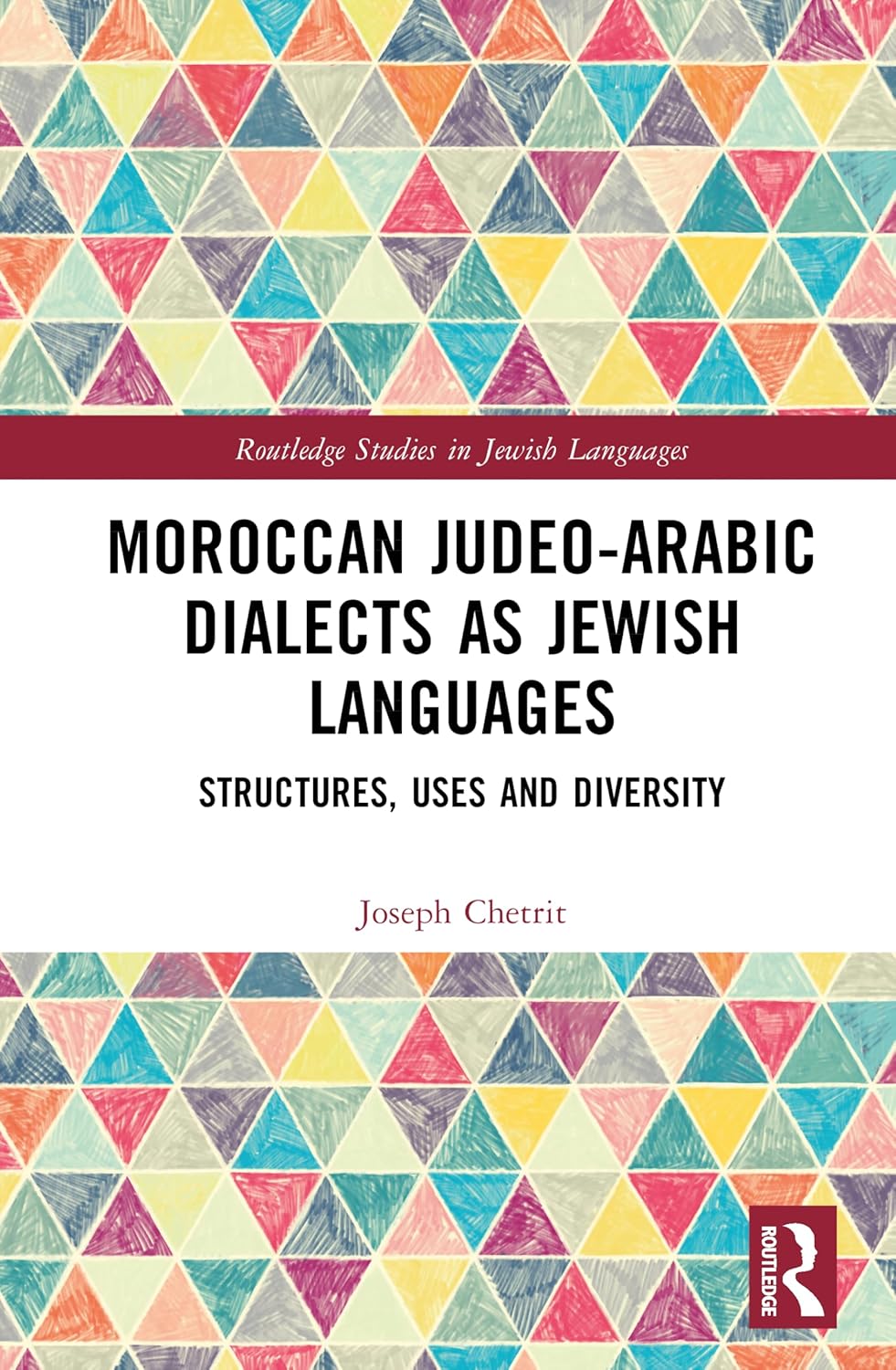
Moroccan Judeo-Arabic Dialects as Jewish Languages
Structures, uses and Diversity
Moroccan Judeo-Arabic Dialects as Jewish Languages provides an in-depth analysis of the diachrony and synchrony of the Judeo-Arabic dialects formed in Morocco from the 16th onwards, their diversity, their constituents, their forms, their categories, and their uses in community and family life.
Drawing on extensive linguistic data from a wide range of sources, including manuscripts and oral performances, this book examines the phonetics, phonology and morphology of the Judeo-Arabic dialects to offer insightful analyses and discoveries. Framed by a theoretical and methodological introduction, this book combines the findings of fieldwork with hundreds of informants from over 130 urban and rural Moroccan Jewish communities, for whom Judeo-Arabic is their mother tongue and primary language, with the advantages of modern linguistic, sociolinguistic, and socio-pragmatic analyses that allow for a better understanding of natural dialectal phenomena and their interpretation.
The book will be relevant to scholars of Arabic dialectology, sociolinguistics, and Jewish languages.
Price: $200.00
 Forthcoming
Nonfiction
Rites of Empire
Reforming Judaism in Imperial Russia
In Europe, the second half of the nineteenth and early twentieth centuries were a time of conflict and creativity about the nature and role of the sacred in private life and public culture. During these decades, the imperial Russian state became more interventionist in the realms of religion and culture, with interests in rationalizing religion and wiping out "superstition." At the same time, urban life gave rise to new forms of religious expression.
Rites of Empire explores the religious reform impulse among Jews in the Russian Empire, home to the world's largest Jewish population over the long nineteenth century. Moving beyond the old narrative of Russian Jewry as Orthodox or secular, Ellie R. Schainker shows how many Russian Jews in fact sought a synthesis between modernity and religious Judaism. Rabbis and voices in the newly emerging Jewish press debated reforms to Jewish law regarding dress, head coverings, circumcision, the number of prayers recited each day, sabbath observance, education, dietary rules, divorce laws, burial, and other religious practices. Urban Jewish communities built progressive synagogues in places like Vilnius, Odesa, and Moscow that featured choral music as a sign of modern Jewish expression. The imperial state's allowance and even promotion of Jewish reforms and ritual innovations shifted with the rise of political conservatism at the turn of the twentieth century. Religious reform went from being a political asset to being discredited as sectarian and non-conformist, and the state supported an increasingly politicized Orthodox Judaism as a conservative partner in combating revolution and secularity.
Schainker masterfully demonstrates how minority religious behavior was shaped by the imperial state as well as by the minorities themselves. In doing so, she recovers a history of religious diversity that was erased from the memory of Eastern European Jewry during the Soviet years and in the Russian diaspora following mass migration.
Price: $35.00
Forthcoming
Nonfiction
Surviving Translation
Studies of Jews In Antiquity For Tessa Rajak
A tribute to the life-work of Tessa Rajak, evaluating and engaging with major themes to which she has made ground-breaking contributions to the field of Hellenistic Judaism. Key topics include the study of Josephus as a Jewish historian, of the Greek Bible in its Jewish context, Jewish experiences of ‘diaspora’ life under Greek and Roman rule (including attitudes towards the Roman Empire), the interpretation of Jewish inscriptions, and Jewish creative engagement with the art of translating Jewish traditions into new contexts.
Price: $147.00
 Forthcoming
Nonfiction
Antisemitism and Jew Hatred
Psychological Perspectives
<p><b>An unflinching and up-to-date examination of the latest trends and research in antisemitism</b> <p>In <i>Antisemitism and Jew Hatred: Psychological Perspectives,</i> experienced psychologist and researcher Julie Ancis delivers an insightful and empirically grounded discussion of the social and psychological dimensions of antisemitism. The book offers a collection of groundbreaking perspectives from leading scholars who dissect contemporary antisemitic thought. Together, they explain the impact of online discourse on antisemitism, generational shifts in attitudes towards Israel, Jews, Zionism, and antisemitism, and the cognitive processes that power antisemitic prejudice. <p>The authors provide three comprehensive sections on historical and modern antisemitism. They begin with the historical and present-day manifestations of antisemitism, including its sociocultural, political, and psychological implications. They then cover cutting-edge research on antisemitism, including online trends and detection methods. Finally, the book concludes with extensive information on how to combat antisemitism in the real world. <p><b>Inside the book:</b> <ul> <li>An expansive and authoritative review of the psychological and social foundations of antisemitism</li> <li>Practical strategies for scholars, educators, and researchers interested in combating antisemitism and mitigating its harmful effects</li> <li>An accessible synthesis of new, empirical research, historical analysis, and contemporary trends in technology and society as they pertain to antisemitism</li> </ul> <p>Perfect for professors and researchers of psychology, <i>Antisemitism and Jew Hatred</i> is also a must-read for clinicians, mental health practitioners, researchers with an interest in prejudice, hate, and discrimination, as well as the social and political movements motivated by those things, and undergraduate and graduate students of psychology.
Price: $79.95
 Forthcoming
Nonfiction
Holocaust Migration in German Jewish Literatures
Analysing the past two decades of literature on Holocaust memory and migration stories, Agnes Mueller engages with writers such as W. G. Sebald, Thomas Bernhard, Edgar Hilsenrath, Benjamin Stein, Mirna Funk, Fred Wander, Barbara Honigmann, Julia Franck, Sasha Marianna Salzmann, Olga Grjasnowa, and Kat Kaufmann to explore current debates on Israel, the German Democratic Republic, gender, Jewish and Muslim identity, and antisemitism. Her new readings of German-language texts by younger authors present robust challenges to entrenched ideas concerning the singularity of the Holocaust, multidirectional memory, and a range of other memory debates. Jewish identity and Muslim identity are shown in direct conversation with other migrants' experiences, and literature is revealed to be a brave space where Holocaust memory is newly imagined. Mueller's study invites a radically new way to think about the Holocaust and sheds new and valuable light on adjacent contemporary discourses.
Price: $130.00
 Forthcoming
Nonfiction
Hungarian Holocaust Revisited
New Discoveries and Insights
In the past decades, commemorative volumes with contributions from esteemed scholars have been published at each decade anniversary of the Hungarian Holocaust (the ghettoization and deportation of 1944). While these volumes have become milestones in Hungarian research, they rarely contained the research results of young academics who, in the past decades, have caught up with the trends in Western Holocaust research. Therefore, in this publication we not only aim to commemorate the Holocaust in Hungary but also to present new approaches and perspectives, such as the gendered aspect, microhistory, memory research, trauma studies, and so forth. This volume, for the first time, provides a synthesis of current Holocaust research in Hungary for international academics working in the fields of Holocaust studies, genocide studies, and Hungarian studies.
Price: $117.00
 Forthcoming
Nonfiction
A God-Shaped Nation
Five Hundred Years of Religion in America
Ever since conquistadores claimed Taino land in the name of their Catholic God and New England Puritans formed their strictly Protestant “city on a hill,” religion has been central to American life. Even as some found religious freedom—Rhode Island welcomed the Quakers, Jews, and Baptists that Massachusetts expelled as dissenters—indigenous people and Africans forced into slavery struggled to protect their religious practices. With the constitutional separation of church and state, it fell to the American people to decide: would they sharpen religion’s formidable powers of division, or reimagine its creative possibilities?
In A God-Shaped Nation, Brook Wilensky-Lanford follows this essential American tension from first contact through the 2024 election. This is an expansive history of extraordinary religious questions, told through the ordinary people who grappled with them. It is a story of defiance: Anne Hutchinson, preaching against Puritan clergy; Reform rabbi Isaac Mayer Wise serving soft-shell crab to his kosher guests at an 1883 banquet; and Wovoka, a Paiute man who envisioned the Ghost Dance movement, which persisted in the face of violent government repression at Wounded Knee. It is also a story of community: Millerites waiting together in vain for Jesus’s return on a rainy October night in 1844; Chinese immigrants bringing Daoist and Buddhist gods to their California temples; Mormons pushing westward to build their “new Zion” in Utah. And in the last fifty years, it has been a story of muscular political power, as the religious right has sought to shape the present and paint the past in its own image.
At a moment when religion penetrates even the most secular aspects of American life, understanding its history is more essential than ever before. “It is in history that the very human work of religion happens,” Wilensky-Lanford shows us, “and in ordinary time that even the most carved-in-stone tenets can and do change.”
Price: $38.00
 Forthcoming
Nonfiction
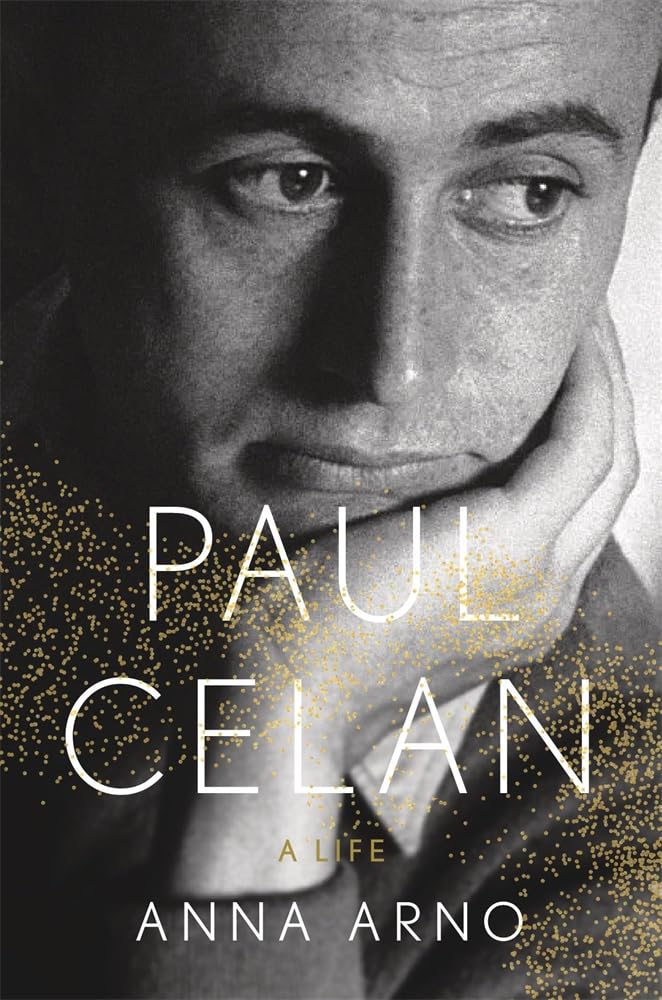
Paul Celan
A Life
Though Paul Celan's poems are widely appreciated, the richness of his life has escaped scholarly attention. Anna Arno pens the definitive biography of one of the twentieth century's great writers, exploring Celan's Jewish upbringing at the crossroads of European cultures, the ravages of the Holocaust, exile, and his struggles with mental illness.
Price: $35.00
 Forthcoming
Nonfiction
1873
The Rothschilds, the First Great Depression, and the Making of the Modern World
From the author of the Pulitzer Prize–winning Lords of Finance, a magnificent and timely reckoning with the first truly global financial calamity and the famous banking family at the center of the whirlwind
Over the course of the 1850s and 1860s, during the first era of globalization, the world experienced an unprecedented economic boom. Fueling this expansion was an explosion in the global bond market, at the hub of which stood one family—the Rothschilds, arguably the wealthiest banking family in history. While the giant sums of capital provided through the bond market built the railroads, the century’s most transformative investments, the money raised also unleashed a frenzy of speculation, massive overinvestment, and wasteful borrowing by governments.
With excessive euphoria leading to disappointed expectations, in the early 1870s the bubble burst. Stock markets from Vienna to New York crashed, and dozens of railroads and many governments defaulted. Financial officials responded by blundering into a precipitous remaking of the global currency system—exacerbating the ensuing economic collapse and setting the stage for decades of a punitive deflation that sparked waves of anti-globalist populism. As Liaquat Ahamed shows us in this enthralling history, the crisis of 1873 was, among other things, a death blow to Reconstruction in the United States and the proximate cause of the Ottoman Empire’s slow death spiral. Ironically, though the Rothschilds had presciently kept a low profile during the bubble, when the deluge came, they were viciously scapegoated as part of a wider hatred directed at “Jewish finance,” a strain of antisemitism that would come to full evil flower during the twentieth century.
1873 is a bird’s-eye reckoning with the full dimension of the crisis, from its buildup to its long aftermath. The Rothschilds and a cast of other witnesses give us the human perspective. And we have a brilliant financial historian’s grasp of the larger forces at play, resulting in a global narrative with thrilling explanatory power.
Price: $32.00
 Forthcoming
Nonfiction
A Collector's Odyssey
How Marianne de Goldschmidt-Rothschild Saved Her Paintings from Nazi Looting
A Collector’s Odyssey presents a case of agency and moxie in the face of ruthless Nazi persecution and organized plunder. It reconstructs the untold story of wartime refugee Marie-Anne von/de Goldschmidt-Rothschild and ascertains the contents and trajectory of her art collection. Yet it is less about provenance, or transfers of ownership, than about one collector’s resistance to relinquishing ownership. Beginning with the collection’s inception in Berlin and spanning two World Wars, it traces artworks secretly relocated to Paris, haltingly transported to the U.S., exhibited there, repatriated, then quietly dispersed. Her in-laws’ respective cases of despoliation and exile further highlight what Jewish collectors faced in Nazi Germany. This book restores their stories to memory, countering the Reich's intended erasure.
Price: $113.00
 Forthcoming
Nonfiction
Voicing Britannia - Opera, Gender, and Jews, 1760-1830
According to a widely held view in eighteenth-century Britain, Britons were somehow inherently unmusical, and this supposed shortcoming was, in fact, a virtue. George Colman explicated this view when he wrote in 1762 that "for arts and arms, a Briton is the thing! John Bull was made to roar―but not to sing."
However, he was responding to an already changing cultural landscape. The 1760s saw the emergence of English-language opera, and the rise of a new generation of British singers ready and able to perform it. In response to long-held suspicions toward Italian opera and its singers, this turn was a bold attempt to offer British audiences a new vision of themselves: as a singing nation.
This is the book's central theme: the question of whether Britons could sing, and how it was negotiated in public discourse within an evolving cultural landscape. Drawing on a wide variety of primary sources, the text follows three groups of groundbreaking singers―high-pitched men, virtuosic prima donnas, and Jews―who sought to shift the landscape of opera in Britain, all the while challenging the prevailing gender norms and social categories. These attempts gave rise to a certain interplay―between an evolving cultural form seeking approval, and an insistent reticence that clung to the conventional. Eventually, the effort to adopt opera as a national vehicle, over a period of several decades, only helped to galvanize a guarded attitude toward music―an attitude that Britons were forced to admit was constitutive of their national identity.
Price: $105.00
 Forthcoming
Nonfiction
Hagiography in the age of mass publishing : Hasidic writing and the making of Jewish modernity
Taking an innovative approach to the study of religious literature and literary modernity, this book examines an overlooked body of texts – collections of Hasidic hagiographic stories about pious leaders, which were mass-produced during the nineteenth century – and makes a compelling argument for reading these works as a crucial part of modern Jewish literature. Despite criticism from members of the Jewish Enlightenment, who dismissed the leisure reading of these Hasidic booklets as lowbrow, the texts found a thriving audience in Eastern European Jewish society. In a nuanced study, Chen Mandel-Edrei challenges the conventional view of Hasidic literature as inherently anti-modern, and demonstrates how these popular stories presented a unique alternative path for Jewish modernity.Placing Hasidic storytelling and publishing in sociopolitical context, Mandel-Edrei centers the reading and writing practices of the ordinary people who drove the success of the hagiographic genre, particularly in Galicia following the 1848 revolutions. She analyzes how Hasidic writers actively engaged with modern political, philosophical, and aesthetic ideas, adapting them to their traditional way of life and reimagining concepts like individuality and communal identity. Deftly combining literary analysis and cultural history, this book illuminates the interplay between religion, mysticism, and the emergence of mass print culture, shedding new light on the history of Hasidism, Jewish literature, and modernity itself.
Price: $65.00
 Forthcoming
Nonfiction
The First Ghetto
venice and the origins of modern antisemitism
In the sixteenth century, amid the horrors of war, the Jews of Venice were forced to live in a fortress-like area known as the Ghetto. Born out of religious hatred and economic necessity, this was the first time the entire Jewish population of a city was segregated so completely. In the centuries that followed, the Venetian Ghetto would become the prototype for ghettos throughout Europe-and paved the way for modern antisemitism. But this is also a tale of hope. Against the odds, the Ghetto's residents thrived, creating a vibrant literary, musical, and religious community. They became essential to the survival of Venice itself-and as more Jewish refugees arrived, the Ghetto became a microcosm of the Jewish world. Tracing its story from its medieval origins to the present day, Alexander Lee explores the Ghetto through the eyes of its Jewish inhabitants, from the domestic troubles of a seventeenth-century rabbi to the agonizing wait of a family bound for Auschwitz. Authoritative, detailed, and timely, this definitive history not only shows what happens when war and economics collide with hatred-but also offers a powerful warning for the future
Price: $32.00
 Forthcoming
Nonfiction
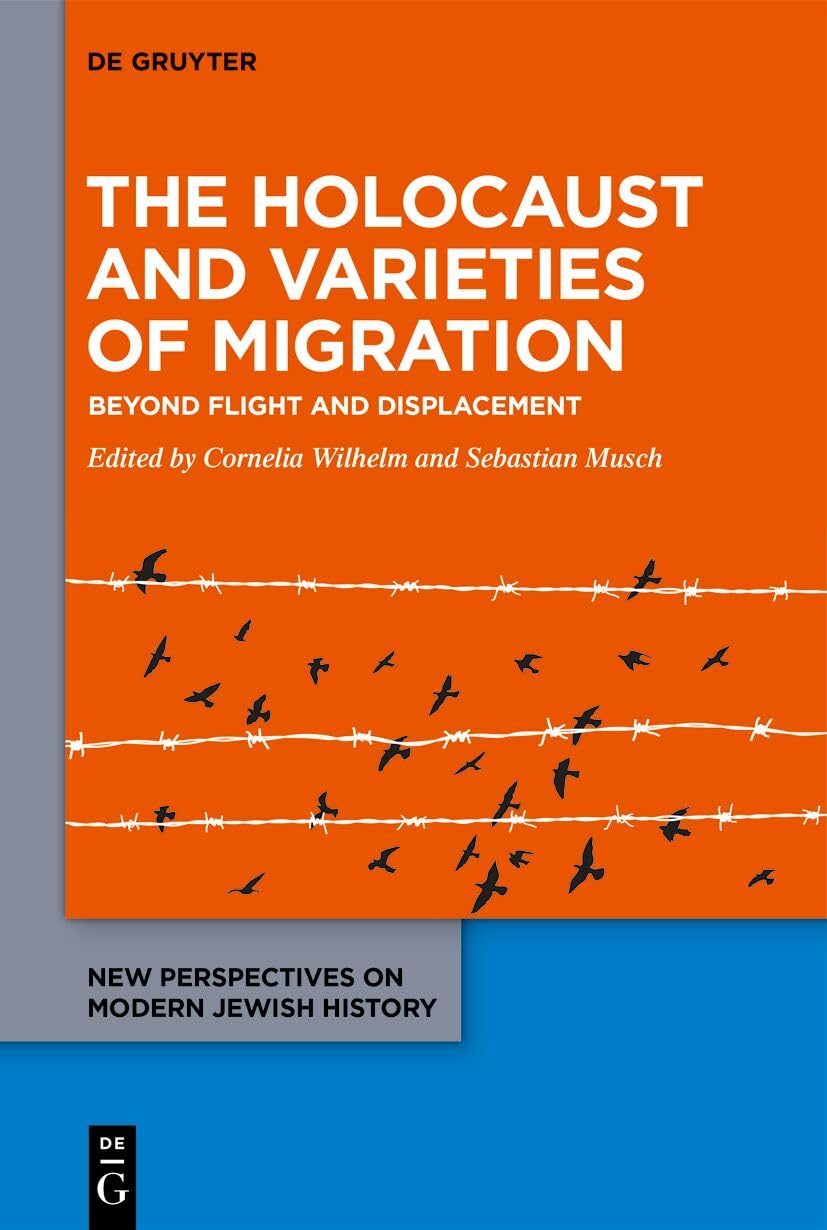
The Holocaust and Varieties of Migration
Beyond Flight and Displacement
This volume sits at the crossroads between Holocaust studies and the history of migration and examines how different forms of migration, broadly understood, were part of the preparation, organization, and execution of the Holocaust. Such a comprehensive analysis of the intersection between the Holocaust and phenomena of migration during this period is currently missing from historiography. Therefore, larger questions are addressed such as: How can research on migration during and after the Holocaust illuminate the latter and vice-versa? How did displacement affect vulnerability and complicity of populations and their memory? Were there opportunities for escape and flight from the Holocaust and under what circumstances? What roles played citizenship, gender, and race in the intersection of migration and the Holocaust? Did the destruction by the Holocaust also destroy the memory of those who were uprooted?
Price: $87.00
 Forthcoming
Nonfiction
Sanctioned Bigotry
A Documentary History of Antisemitism In the United States
In a 1790 letter to Rhode Island Jewish leader Moses Seixas, President George Washington responded to Seixas’s concerns about Jewish persecution, assuring him that America “gives to bigotry no sanction, to persecution no assistance, [and] requires only that they who live under its protection should demean themselves as good citizens.” Historians have typically identified this letter as a symbol of American Jewish exceptionalism, the idea that Jewish life in the United States has been qualitatively distinct from, indeed better than, Jewish life in Europe.
Undergirding this idea is the claim that antisemitism has been a relatively minor force in American Jewish life. In this volume, Britt P. Tevis upends this narrative to reveal various manifestations of Jewish inequality in American history, highlighting the ways that Jews have encountered limited civil and political rights.
Using a remarkable array of primary sources, Tevis traces the history of antisemitism in the United States from 1654 to 2024. Comprising government reports, judicial decisions, correspondence, advertisements, cartoons, social media posts, and more, this documentary reader presents examples of antisemitism in nine overlapping categories: church and state, disenfranchisement, racialization, defamation, antisemitism and anti-Black racism, immigration and citizenship, exclusion and segregation, violence, and anti-Zionism. Tevis also shows how Jews have reacted to instances of inequality and have negotiated their place in America, both as individuals and as a community.
Collectively, these documents expose readers to the underexplored history of anti-Jewish discrimination in America, and the ways that Jews have championed and defended American ideals in the face of inequality.
Price: $45.00
 Forthcoming
Nonfiction
Women, Gender, and Sexuality in the Holocaust
This book presents a comprehensive introduction to the broad and developing field of women, gender, and sexuality in the Holocaust. Adopting a multi-disciplinary approach that incorporates global, gender fluid, and intersectional perspectives, it examines experiences of Nazi Germany, the Nazi-occupied territories, ghettos, camps, resistance and rescue, and partisan movements.
Women, Gender, and Sexuality in the Holocaust synthesizes fresh approaches and frameworks in Holocaust and gender studies research, addressing topics including female perpetrators, sexual violence, masculinity, and queer experiences. Rose introduces readers to interpretations from a wide range of fields, from film and photography to law and psychology. Recognizing the importance of understanding the events of the Holocaust in their historical context, the text begins with an examination of gender roles prior to the rise of the Nazis and expands to include the aftermath and the legacy of the Holocaust through the lens of gender and sexuality. With timelines and definitions of key terminology, this is an essential and accessible resource for students and scholars of the Holocaust, gender studies, and genocide studies as well as all those seeking a better understanding of this evolving discipline.
Price: $57.99
 Forthcoming
Nonfiction
The Jewish Maghreb
North African Experiences in Greater Paris since 1981
Homogenization, Monochromatic Rendering, And The Process Of Schematic Imposition Is Readily Apparent In Modern Mainstream Jewish French Politics. The Jewish Maghreb Explores Complex Self And Communal Understandings Of Maghrebi Jewish Populations And Their Descendants In France Through Ethnography Across Generations. This Study Examines How Colonial History, Migration, And Geopolitics Shape Ongoing Maghrebi Belonging. From Commercial Networks In Paris To Algerian Pilgrimage Journeys, The Book Reveals Communal North African Jewish Navigation Of Plural Sediments Of Self And History. The Heuristic 'maghrebinicité,' Works To Illuminate Ongoing Negotiations Of Memory, Citizenship, And Cultural Transmission In Postcolonial France, Offering Fresh Insights Into Diaspora, Return, And The Persistence Of Transnational Connections.
Price: $24.95
 Forthcoming
Nonfiction
The Future Is Peace
A Shared Journey Across the Holy Land
"Palestinian Aziz Abu Sarah and Israeli Maoz Inon are unlikely peacemakers, dedicated to finding a solution to the bitter war that has decimated historical, ancient land and ended family lines. Despite the losses they have suffered, the resolve of their friendship has taught them that strength and unity are more powerful than the violence of separation. Throughout their travels, they have been constantly asked: In the face of so much pain and suffering on both sides, when there have been so many lives lost and families shattered, how can they ever find hope? Their answer is always the same. One cannot find hope. We must create it. In The Future Is Peace, Sarah and Inon take readers on their unforgettable weeklong journey across the holy land while exploring each other's personal and national histories in a land of competing narratives, amid the turbulent push and pull of near constant war, and the recent devastation that has rocked the world. Their mission-to explain the naivete in believing that more violence can bring security and prosperity to either people while in search of a true and lasting peace. Pairing unapologetic candor and inspirational prose, Sarah and Inon are sending a message to humanity that the people have the power to make change. Peace is achievable, not just between the river and the sea, but throughout the world"-- Provided by publisher.
Price: $30.00
 Forthcoming
Nonfiction
Kafkaesque
Ten Great Writers Translate the Twentieth Century
"What happens to a writer's work when it is translated–specifically, what happens if his name is Franz Kafka?"
In Kafkaesque, Maïa Hruska traces the strange, shape-shifting legacy of one of literature’s most elusive figures—not through traditional biography but through the lives of his earliest and most influential translators. With rigor and élan, she shows us how our understanding of Kafka is inevitably filtered through these voices, many of whom were, or would become, major writers and thinkers in their own right.
Jorge Luis Borges rendered Kafka into Spanish, recognizing in him a fellow architect of the infinite. Primo Levi used the German he acquired in a concentration camp to bring The Trial into Italian despite the “psychoanalytic repulsion” he felt toward Kafka. Bruno Schulz published his Polish edition of the same novel before being shot by a Nazi officer. Vladimir Nabokov annotated The Metamorphosis in exile, having undergone his own transformation–from native to foreigner. Milena Jesenská, Kafka’s great love, translated him into Czech, a language he was both surrounded by and estranged from.
What emerges across these essays isn’t just a portrait of a legendary writer and his translators but also a portrait of the twentieth century itself—its fractures and displacements, its aesthetic revolutions, its ethical crises. Part cultural history, part group biography, Kafkaesque is a dazzling meditation on language, identity, and the irreducible strangeness of reading and being read.
Price: $27.99
Nonfiction
The Portrayal Of Pagan Worship In The Hebrew Bible And Ancient Judaism
How did Jews in the ancient world depict the practices of their pagan contemporaries? In this study, Jesse Mirotznik investigates the portrayal of pagan worship in the Hebrew Bible and ancient Jewish literature. Scholars have assumed that the portrayals in these corpora are consistent over time. Mirotznik, however, shows that there is a fundamental discontinuity between earlier and later depictions of pagan worship. In the Hebrew Bible, these forms of worship are, for the most part, simply assumed to be sincere. By contrast, in ancient Jewish texts from approximately the end of the third century BCE and onward, such worship is increasingly presented as insincere, performed only instrumentally in the service of an ulterior motive. While the worshipers of other gods seem genuine in their devotion, these texts contend, they too must recognize the folly of such worship.
Price: $130.00
 Forthcoming
Nonfiction
Just Language
Walter Benjamin, German-Jewish Exile, and the Critique of Linguistic Violence
Just Language revisits the Weimar period and its representation in the postwar years to explore narratives of linguistic resistance in the works of Walter Benjamin, Theodor W. Adorno, Hannah Arendt, and Paul Celan. How did this generation of exile writers grapple with their experiences of oppression and persecution? How did they create a language of resistance during the decades that prepared the Third Reich and the Shoah?
Facing the devastations of World War I, the book explores how Walter Benjamin analyzed language’s ability to radically break the cyclical violence of war and examines his opposition to expansionism and imperialism in Weimar education and culture. Based on Benjamin’s analysis, Johannßen traces the postwar responses of Hannah Arendt and Paul Celan. While Arendt proposed strategies of metaphorical thinking to counteract the formation of totalitarianism, Celan mobilized silence as a poetic counterforce against oppression and erasure. Just Language argues that every linguistic act and practice, no matter how small or marginalized, entails the ethical task of opposing the normalization and institutionalization of political violence. By tracing how Benjamin and his interlocutors struggled against German fascism, Johannßen presents a memory-based critique of linguistic violence, opening a dialogue between German-Jewish writers and today’s debates on nondiscrimination, propaganda, and social justice.
Price: $34.45
Nonfiction
Here Where We Live Is Our Country
The Story of the Jewish Bund
This story begins with Molly Crabapple's discovery of the art and ephemera left behind by her great-grandfather, Sam Rothbort. Sam was a rough-and-tumble kid who worked at a tannery deep in the Pale of Settlement in 19th century Russia. As a young man he discovered that he was not just a laborer, but an artist--and soon after that, a revolutionary, enlisted in the strikes, street fights, and study groups of a new group of radicals sweeping the Pale: the Jewish Bund. Crabapple saw herself not just in her great-grandfather's career as an artist, but in his revolutionary inclinations. In the story of the Bund, she discovered a movement of artists, philosophers, working people, and street fighters with a thrilling utopian vision for the world. The founders of the Bund understood themselves as Jews--people with a special history of oppression--but also as part of an international movement that rejected all forms of ethnonationalism. They fought for this vision in parlors, cafes, battlefields and prison camps. Their ideas helped spark the Russian Revolution, which soon swept them aside. Their fighters battled pogromists in an age of nationalism and their leaders tangled with Zionists over the destiny of the Jewish people. Their last stand was in Nazi-occupied Warsaw, where they helped lead a doomed uprising, the heroic and tragic climax to their story. In retelling the epic history of the Bund and its extraordinary cast of characters during one of the most politically and culturally volatile periods in European history, Crabapple asks a critical question: did the Bund fail because of an unworkable dream of solidarity? Or did the world, in thrall to zero-sum nationalism, fail the Bund? This dynamic story is driven by that urgent question--and offers a new lens through which to see our contemporary struggles.
Price: $32.00
 Forthcoming
Nonfiction
Judeophobia
A History
Throughout the history of the Western world, Jews have suffered various forms of exclusion, stigmatisation, and discrimination that have forced them always to be aware of their very particular situation. The Jews became a community under siege and, as Shlomo Sand argues, Judaism was shaped by the hostile gaze of Christian civilization. While the forms of hostility endured by the Jews have varied over the centuries, it is impossible to understand twentieth century anti-Judaism, or Jewish identity itself, without taking account of the sediments of mental hatred, fuelled by religious belief, which have survived the passage of time. While antisemitism is the term commonly used today, Sand prefers ‘Judeophobia’, which predates the appearance of ‘antisemitism’ and is more precise. Looking back over the centuries, he seeks to identify some of the stages in the age-old, incandescent hatred of the Jews and tries to understand what remains today of this trenchant hostility. He also questions whether Zionism, born as a distressed response to modern Judeophobia, has ended up mirroring it. To what extent has Zionism inherited the ideological foundations that have always been characteristic of the persecutors of the Jews? This concise history of anti-Jewish hatred will be of great interest to anyone concerned with one of the most insidious and persistent features of Western civilization. Throughout the history of the Western world, Jews have suffered various forms of exclusion, stigmatisation, and discrimination that have forced them always to be aware of their very particular situation. The Jews became a community under siege and, as Shlomo Sand argues, Judaism was shaped by the hostile gaze of Christian civilization. While the forms of hostility endured by the Jews have varied over the centuries, it is impossible to understand twentieth century anti-Judaism, or Jewish identity itself, without taking account of the sediments of mental hatred, fuelled by religious belief, which have survived the passage of time.
While antisemitism is the term commonly used today, Sand prefers ‘Judeophobia’, which predates the appearance of ‘antisemitism’ and is more precise. Looking back over the centuries, he seeks to identify some of the stages in the age-old, incandescent hatred of the Jews and tries to understand what remains today of this trenchant hostility. He also questions whether Zionism, born as a distressed response to modern Judeophobia, has ended up mirroring it. To what extent has Zionism inherited the ideological foundations that have always been characteristic of the persecutors of the Jews?
This concise history of anti-Jewish hatred will be of great interest to anyone concerned with one of the most insidious and persistent features of Western civilization.
Price: $19.95

Nonfiction
The Pickled City
A Biography of New York Pickles
The Pickled City takes a glorious deep dive into the history of the iconic brined cucumber by tracing the pickle’s journey from ancient Mesopotamia to Eastern Europe to Manhattan’s Lower East Side, unearthing a hidden world of family stories and economic contributions that helped shape New York’s cultural, culinary, and literal foundations.
With a foreword by pickle pioneer Sandor Katz and an astonishing wealth of photographs, historical images, documents, illustrations, advertisements, and more.
Price: $26.95

Nonfiction
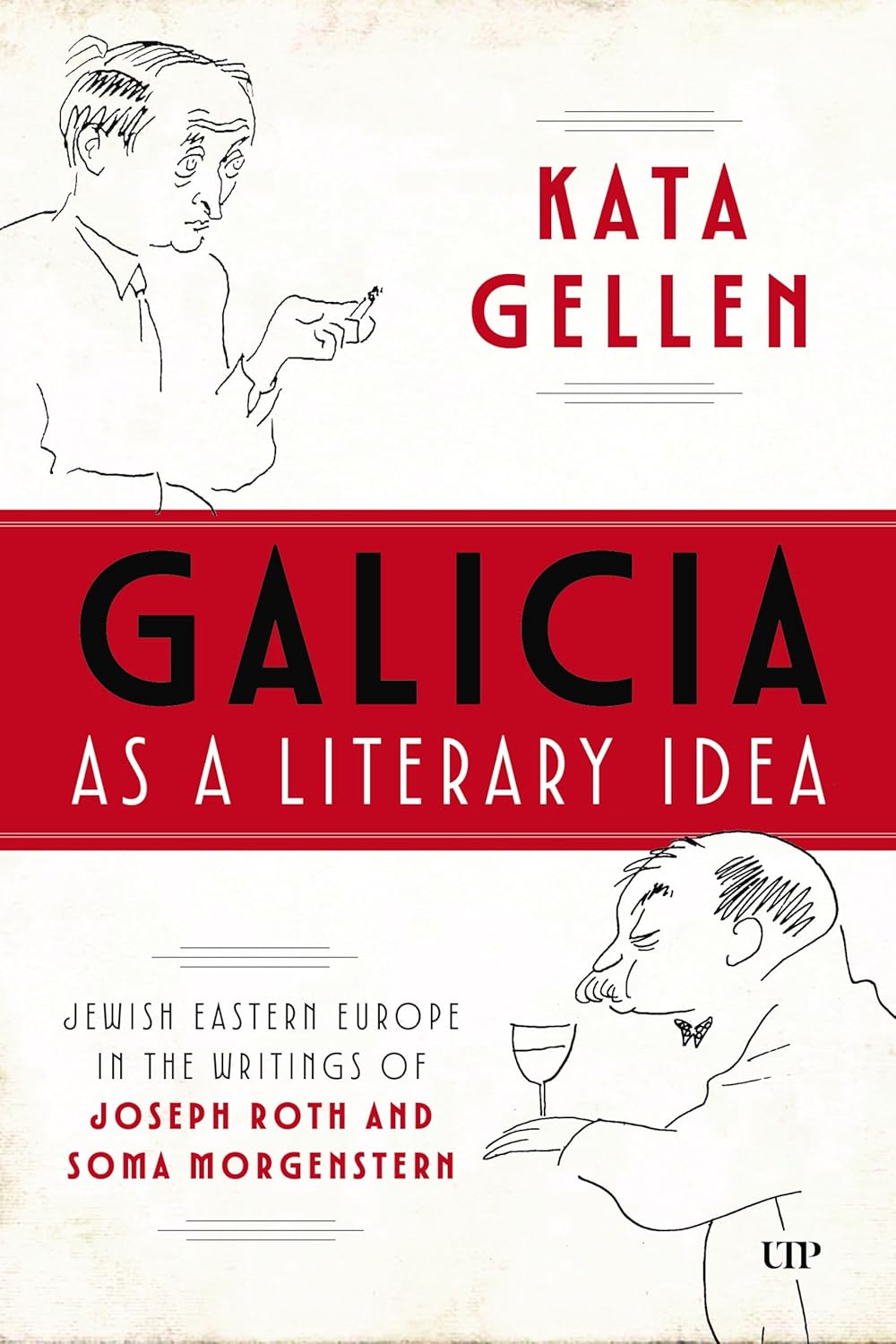
Galicia as a Literary Idea
Jewish Eastern Europe in the Writings of Joseph Roth and Soma Morgenstern
In the decades following the dissolution of Austria-Hungary, the former province of Galicia inspired the literary imagination of two German-language natives of this region, Joseph Roth and Soma Morgenstern. Galicia as a Literary Idea explores what their engagement with Galicia means for modern Jewish culture, history, and memory.
For Roth and Morgenstern, Galicia encapsulates the rich interplay between contemporary developments – including urbanization, secularization, embourgeoisement, political self-determination, and new technologies – and traditional Jewish life in Eastern European villages and shtetls, characterized by tight-knit families and communities, religious observance and ritual, Yiddish language and culture, and Hasidic belief systems. Despite the tensions between these elements, this book presents them as a complex network rather than a battle between old and new, east and west, or tradition and modernity. German and Jewish studies scholar Kata Gellen also traces the shifting attachments of Galician Jews to German, a language that symbolized emancipation, culture, empire, and, ultimately, disillusionment and persecution.
Through original readings of well-known and neglected works by Roth and Morgenstern, Gellen shows how the literary idea of Galicia is shaped by continuous struggle and emergent hope, whether as earthly possibility or redemptive promise. This book thereby uncovers the complex relationship between center and periphery in Jewish modernity and reanimates a dimension of modern Jewish literary history that has been obscured by the dark shadow of the Holocaust.
Price: $95.00
Nonfiction
Galicia as a Literary Idea
Jewish Eastern Europe in the Writings of Joseph Roth and Soma Morgenstern
In the decades following the dissolution of Austria-Hungary, the former province of Galicia inspired the literary imagination of two German-language natives of this region, Joseph Roth and Soma Morgenstern. Galicia as a Literary Idea explores what their engagement with Galicia means for modern Jewish culture, history, and memory.
For Roth and Morgenstern, Galicia encapsulates the rich interplay between contemporary developments – including urbanization, secularization, embourgeoisement, political self-determination, and new technologies – and traditional Jewish life in Eastern European villages and shtetls, characterized by tight-knit families and communities, religious observance and ritual, Yiddish language and culture, and Hasidic belief systems. Despite the tensions between these elements, this book presents them as a complex network rather than a battle between old and new, east and west, or tradition and modernity. German and Jewish studies scholar Kata Gellen also traces the shifting attachments of Galician Jews to German, a language that symbolized emancipation, culture, empire, and, ultimately, disillusionment and persecution.
Through original readings of well-known and neglected works by Roth and Morgenstern, Gellen shows how the literary idea of Galicia is shaped by continuous struggle and emergent hope, whether as earthly possibility or redemptive promise. This book thereby uncovers the complex relationship between center and periphery in Jewish modernity and reanimates a dimension of modern Jewish literary history that has been obscured by the dark shadow of the Holocaust.
Price: $95.00

Nonfiction
Bridge Builder
My Life Since the Holocaust
Bridge builder: My life since the Holocaust is the fourth and final volume of Shimon Redlich's autobiographical cycle, which began with Together and Apart in Brezany (2002), a description of relations among Poles, Ukrainians and Jews in his native town and his survival during the Holocaust. It continued with Life in Transit (2010), an account of his family's resettlement in postwar Lodz and a new life in Israel. A New Life in Israel (2018) portrayed his adjustment to life on a kibbutz and service in the Israel Defense Forces. In Bridge Builder, Redlich recounts his life since the late fifties. It features his academic journey from student in Jerusalem and the US to professor at Ben-Gurion University, his friendships, his encounters with Jews and non-Jews in Eastern Europe, and his unconventional approach to controversial topics. As in previous volumes, in Bridge Builder Redlich's own memories are supported and enriched by meticulous historical research.
Price: $36.10

Nonfiction
Forest as Commemoration in Jewish-Israeli Memory Culture
A Study in Environmental Memory
Situated within the broadly understood subfield of environmental memory studies, this book explores Israeli forests as spaces of commemoration. It investigates their significance in the Jewish‑Israeli memory culture over the last century, as well as their role as a recurrent form of environmental memorial, understood as a commemoration that uses the organic as both the symbolic and the building substance. In doing so, it reveals the roles that the natural environment plays in memory practices: as a carrier of symbolic meanings, and also as an acting, more‑than‑human element of memorial spaces.
Employing the perspective of environmental hermeneutics, the analysis is grounded in the realities of the Israeli–Palestinian conflict and reflects on the intricate intersection of ideological, political, socio‑economic, personal, and institutional dimensions of local tree planting. Simultaneously, it draws from instances of arboreal commemorations found in other geographical and cultural contexts, situating the practice of memorial forests within the wider framework of environmental memory and its associated social practices. In this way, it offers instructive insights for other cases of arboreal remembrance, highlighting both the potential benefits and risks linked to environmental memorials.
Utilising an interdisciplinary approach, this fascinating and groundbreaking volume will engage scholars and researchers from a wide range of disciplines, including Memory Studies, Cultural Geography, Israel Studies, and Environmental Humanities.
Price: $61.99

Nonfiction
Was it Just a Matter of Luck?
A Family, the Holocaust, and the Founding of a Museum
Intimate in voice and sweeping in historical reach, "Was It Just a Matter of Luck?" bears witness to the endurance of memory and the moral force of survival. Through the voice of his mother, Ray Kaner - a fiercely intelligent young woman who endured four years in the Lódź ghetto, brutal slave labor, and near death in Bergen-Belsen - Dr. Charles Kaner reconstructs her harrowing passage through the Holocaust and the sustaining power of sisterhood that helped her survive.
Interwoven with his own journey as a second-generation survivor, Kaner traces how Ray transformed unspeakable trauma into purpose. In postwar America, she became a quiet but determined force in the preservation of Holocaust memory, helping to establish one of the nation's earliest survivor-testimony projects and laying crucial groundwork for what would become the Museum of Jewish Heritage. At once a son's act of devotion and a profound historical reckoning, Was It Just a Matter of Luck? asks not only how one woman survived, but how survival itself became a legacy.
Price: $24.95

Nonfiction
Mordecai M. Kaplan
Restless Soul
An engaging biography that goes behind the myths to reveal the complex life of a transformative figure in modern American Judaism
Rabbi, writer, teacher, and thinker, Mordecai M. Kaplan (1881–1983) was one of the leading Jewish personalities of twentieth-century America. Founder of the Reconstructionist movement, he was a maverick who reshaped religious faith and practice, generating controversy at every turn. Known for his relentless energy and imagination, Kaplan redefined Jewish identity, emphasizing reason over superstition and intellectual discovery over passive inheritance. He introduced new rituals, reevaluated the role of tradition, and advocated for a Judaism that evolved with the times and fostered an inclusive community. Drawn extensively from Kaplan’s private diaries and correspondence with family and close friends, Jenna Weissman Joselit’s intimate portrait of this influential and iconoclastic thinker sheds new light on the meaning of American Judaism, identity, the limits of belonging, and the role of faith in modern society.
Price: $32.50

Nonfiction
The Oxford Handbook of Jewish Philosophy
This Handbook provides an examined and nuanced overview of the history and devlopment of Jewish philosophy, from antiquity up to current trends in the field. Editors Paul W. Franks and Yitzhak Y. Melamed have brought together an international team of philosophers and scholars to tackle a complex and multi-layered literary corpus that stretches over two millennia. This volume is comprised of six divisions, each telling the story of Jewish philosophy from a distinctive vantage point: an introductory section addressing the place and historiography of Jewish philosophy within broader academia; the history of Jewish philosophy with an eye towards major schools and periods; interactions between Jewish philosophy and other branches of the Jewish literarary tradition; interactions with non-Jewish philosophy; key topics in Jewish philosophy; and new directions in the field. The result is a uniquely comprehensive and multi-layered survey of this incredibly important intellectual tradition. Drawing from thinkers at the top of their field and edited by two of the most important philosophers working today, this Handbook is the authoritative guide to the history, development, and trajectory of Jewish philosophy.
Price: $205.00

Nonfiction
The Story of the Jewish Legion
This is a story of fighting men, struggling in a great cause. The Jewish Legion was organized and fought in the First World War, their goal the securing of The Land of Israel as a Jewish National state. But his story can not be told without telling also of British imperial intrigue, of promises lightly given and lightly broken, of the injustice founded in opportunism and confirmed by decree.
Founder and guiding spirit of the Jewish Legion and architect of the plan for a Jewish army was Vladimir Jabotinsky (1880-1940). He has written his story simply and faithfully, giving praise to the men who
Price: $22.95

Nonfiction
Beyond the Elite
Everyday Jewish Lives in Medieval Northern Europe
Beyond the Elite focuses on the everyday social history of Jews in medieval northern and central Europe using four interpretive lenses: people, space, objects, and rituals. Contributors to this innovative volume discuss aspects of daily life through which non-elite Jews interacted with their Christian neighbors, while at the same time creating and affirming their own religious, social, and cultural identities. This volume makes possible a multifaceted understanding of different perspectives on Jewish life, demonstrating the extent to which medieval Jews were simultaneously integral to majority-Christian communities and also strangers within them.
Based on scholarship conducted during a multiyear, team-conducted research project, Beyond the Elite addresses topics such as orphanhood, social exclusion, travel by river, local power struggles, architectural styles, pawnbroking, wedding customs, and religious rituals. More broadly, in detailing the rhythms of daily life during times of relative calm for Jewish communities, it becomes clear that anti-Jewish persecution and violence from the late thirteenth century was both manifested within and a rupture of existing social orders.
Contributors: Tzafrir Barzilay, Elisheva Baumgarten, Neta Bodner, Nureet Dermer, Aviya Doron, Albert Evan Kohn, Miri Fenton, Annika Funke, Ariella Lehmann, Andreas Lehnertz, Eyal Levinson, Ido Noy, Erez Rochman, Miri Rubin, Hannah Teddy Schachter, Amit Shafran.
Price: $36.95

Nonfiction
Nahmanides
An Intellectual Biography
In this innovative intellectual biography, Oded Yisraeli offers an unprecedented, comprehensive portrait of Rabbi Moses b. Nahman, or Nahmanides (1194-ca. 1270), one of the greatest Jewish thinkers and writers of the Middle Ages. Nahmanides' creative energy spanned his long life, covering diverse fields - Talmudic and halakhic exegesis, biblical commentary, Kabbalah, homiletics, polemics, and poetry - that have all individually been the object of extensive scholarly study. This book brings the many facets of Nahmanides' work together, and breaks new ground by relating the circumstances of his life to the long arc of his intellectual career. Yisraeli examines Nahmanides' oeuvre in light of his time and place, reading his writings as a discourse with both movements within the Jewish world of his day and the lively scholasticism of thirteenth-century Western Europe. He takes account of changes over time both in the religious world around Nahmanides, and in his doctrine throughout his career, raising new questions about Nahmanides' work and the influences on his thought. Rooted in deep historical research and attention to social context, this book offers a new historical and biographical perspective that illuminates Nahmanides' religious and intellectual world.
Price: $60

Fiction
The Collected Works of Esther Kreitman
Esther Kreitman’s fiction explores the realities of Jewish life in Europe in the first half of the twentieth century. Uncompromising in her critique of injustice and hypocrisy, she exposes the emptiness of those who maintain nothing of Judaism but rituals devoid of meaning. She insists on the dignity of those denied opportunity: the poor, women, and all excluded from modern education. Her characters love and work, despair and rebel as they move through the streets and homes of the shtetl, Warsaw, Antwerp, and London.
Price: $44.95

Nonfiction
II Samuel
David the King
The second half of the book of Samuel contains some of the most dramatic stories in the Bible, portraying the unique character of King David, in all its power and complexity. The book explores David’s personal journey and the lives of those surrounding him, while also addressing foundational themes such as the significance of the Temple and the transformative power of repentance.
As in I Samuel: A King in Israel, in II Samuel: David the King Rabbi Amnon Bazak analyzes the biblical chapters one by one, engaging in a deep exploration of the plain meaning of the text (peshat). Using both traditio
Price: $34.95

Nonfiction
Remembering Resistance
A Jewish Memoir from Nazi-Occupied Budapest, 1944-45
The existence and achievements of Jewish “self-rescuers” within Nazi-occupied Hungary remains, in spite of their significance, historically underexplored. In this illuminating chronicle of the life and work of a Jewish couple, László and Eugenia Szamosi, Remembering Resistance seeks to address this lacunae, offering a unique insight into a family’s personal history of resistance under the Nazi regime. Combining oral testimony from fellow survivors, with a previously-unpublished translation of László’s memoir, this book foregrounds the remarkable work of the Szamosis and their network, in rescuing Jews from the Death Marches and reuniting displaced families. Through doing so, this book offers a powerful framework for mediating how we remember Jewish experiences of the Holocaust.
Price: $27.95

Nonfiction
Wissenschaft Des Judentums in Europe Comparative and Transnational Perspectives
Despite the fact that it was never really accepted as part of European academia before the Shoah, the tradition of Wissenschaft des Judentums that emerged after the Enlightenment period spread throughout most of the European-Jewish communities, creating independent institutions, producing an impressive record of research on Jewish history, religion, literature and culture, and engaging in a creative and critical dialogue with other scholarly disciplines. Building on new research topics and exploring innovative theoretical and methodological approaches, this volume, written by an interdisciplinary group of scholars, provides the first comparative, transnational history of the different traditions and networks of Jewish Studies in Europe during the 19th and 20th centuries. Particular emphasis is put on the mutual perceptions and interactions of those national and local traditions as well as on the impact the challenges of modernity had on Jewish scholarship and its self-definition within the different social and cultural contexts in Europe.
Price: $182.9

Nonfiction
West of the Ghetto
Jewish Women, Old San Francisco, and American Literary Culture
Blending history, collective biography, and literary criticism, author Lori Harrison-Kahan repositions the American West as a generative space for turn-of-the-twentieth-century Jewish women's literature. This book demonstrates that California-based writers Emma Wolf, Bettie Lowenberg, Harriet Lane Levy, Miriam Michelson, and Anna Strunsky played formative roles in Jewish American literary history. Shaped by ethno-religious, gender, class, and settler-colonial dynamics of San Francisco and the frontier, their works challenge masculinist views of Jewish literature and contrast dramatically with well-known stories of the New York ghetto. Mining print and archival sources (including newspapers, magazines, novels, letters, diaries, and unpublished writings), Harrison-Kahan narrates the obscured lives of these pioneering women and considers how literary communities―from bourgeois women's clubs to socialist bohemia―sustained them. With incisive purpose and clear-eyed nuance, West of the Ghetto showcases Jewish women writers' vital and wide-ranging contributions to American literary culture.
Price: $36.99

Nonfiction
Hope and contemporary Israeli peace movements : the emotional dimension of collective peace politics
https://m.media-amazon.com/images/I/71te-xqtaHL._SL1360_.jpg
This book investigates and compares two contemporary Israeli peace movements through the angle of collective emotions, and specifically of hope Drawing on empirical qualitative research combining interviews with Jewish and Arab- Palestinian activists and ethnographic work, the work provides unique documentation of the birth and development of Standing Together (a mixed-gender peace movement) and Women Wage Peace (a women's peace movement). It explores the meaning of hope for Israeli peace activists, and shows the concrete efforts that both movements undertake to trigger hope, as part of an intersectional peace politics and of a non-partisan women's peace politics, respectively. The book also engages with the post-October 2023 developments in the Middle East, showing how both peace movements, now followed by others in the Israeli peace camp, continue to invest in their politics of hope amid devastation, fatigue and fear. Offering a gendered typology of hope-related emotion work useful beyond the cases at hand, the book proposes that collective hope-based action, combined with other emotions, might be powerful in all contexts of despair and protracted conflicts. This book will be of interest to students of peace and conflict studies, social and peace movements, gender studies, nonviolent resistance, international relations, and Israel- Palestine/Middle East